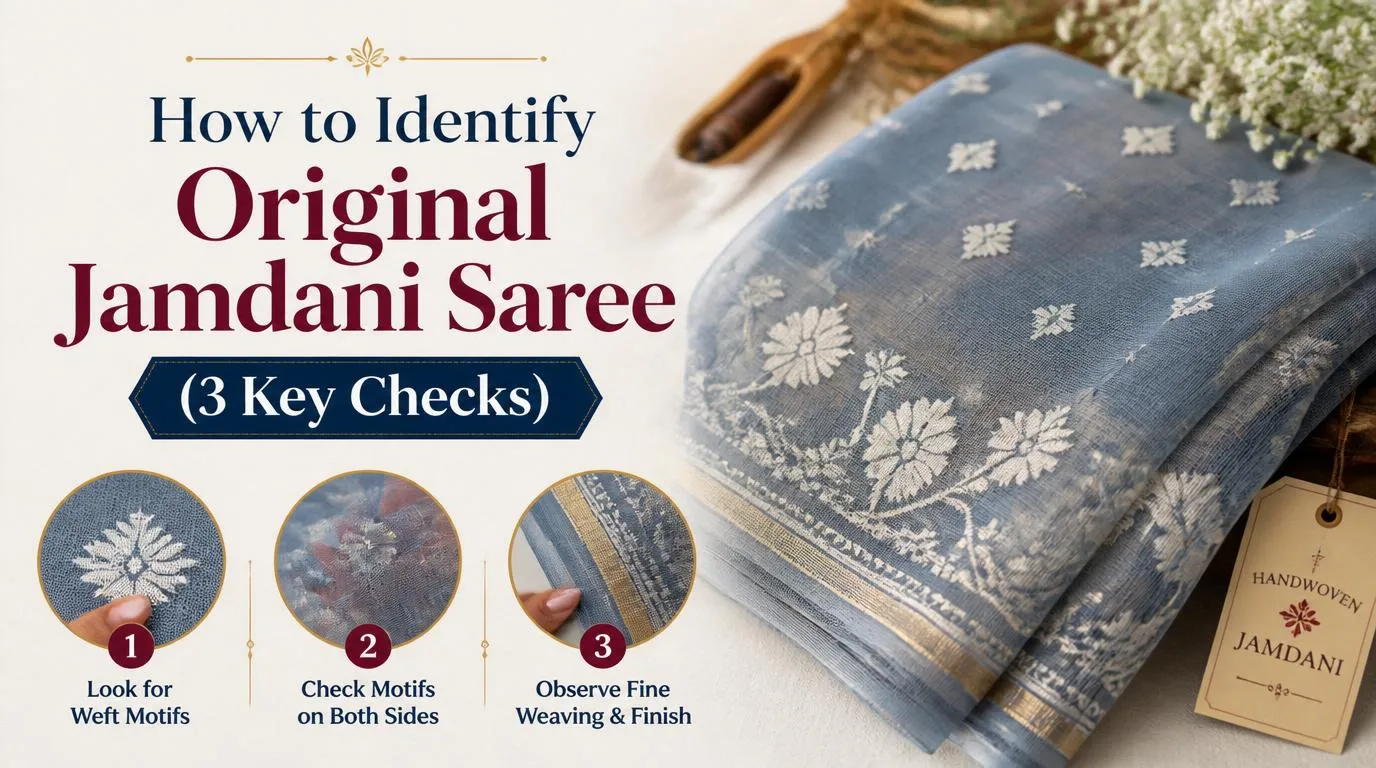
Introduction
You've seen them – Jamdani sarees that look stunning in product photos but turn out to be stiff, shiny, and disappointingly fake when they arrive. Or maybe you've visited a market and been bombarded with claims of "authentic handloom" while the price seems too good to be true.
The truth is, powerloom copies have become incredibly sophisticated. They mimic the look of Jamdani motifs, use similar colors, and even come with deceptive tags. But the real thing – handwoven Jamdani – has a soul that cannot be replicated by machines. And once you know what to look for, you'll never be fooled again.
In this guide, I've compiled seven foolproof methods to identify authentic handloom Jamdani. These are techniques I've learned from weavers, textile experts, and years of personal experience. Let's dive in.
Table of Contents
1. The Selvedge Test – The First Clue
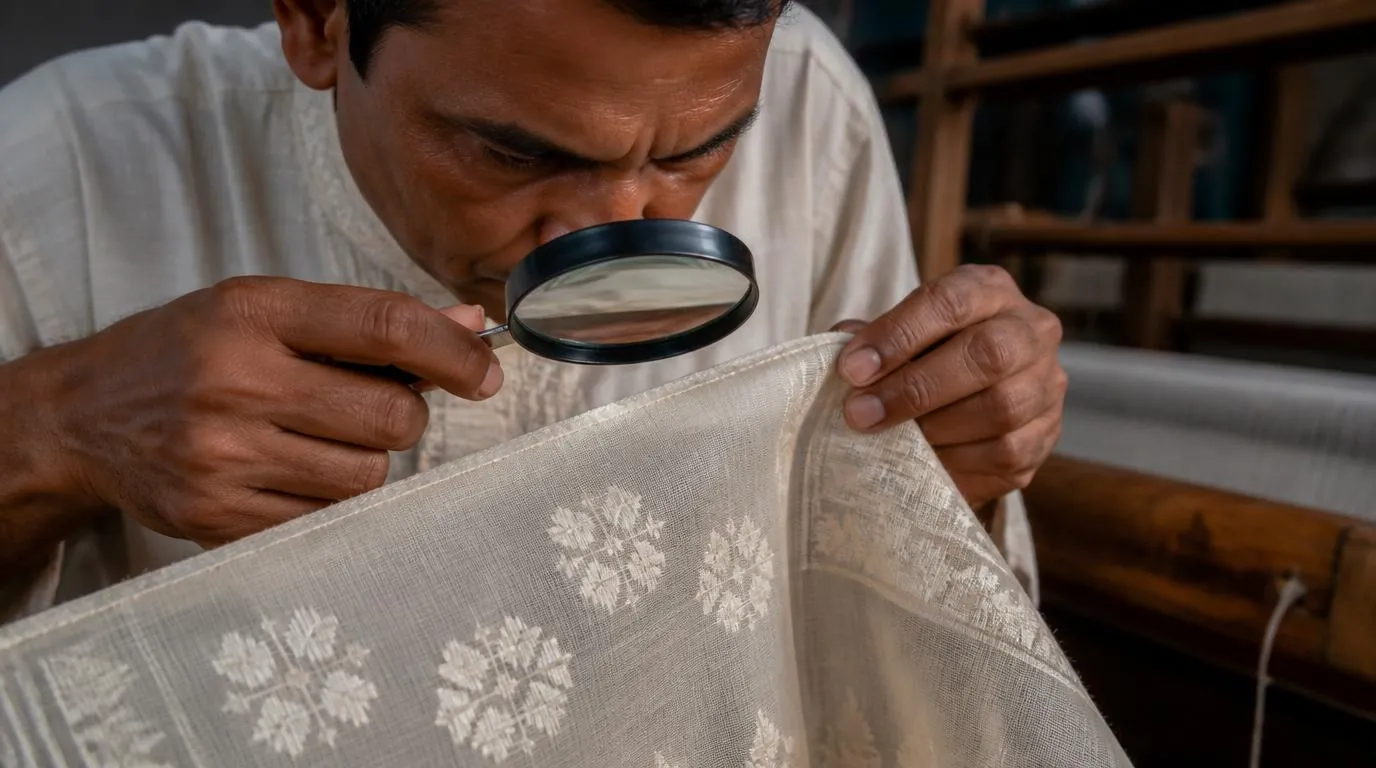
The selvedge is the finished edge of the fabric that runs along the length of the saree. This is one of the easiest and most reliable ways to identify handloom Jamdani.
- Authentic handloom: The selvedge is tightly woven, neat, and compact. It is created as part of the weaving process – the weaver uses a special technique to create a clean, firm edge. The selvedge feels smooth and integrated with the fabric.
- Powerloom fake: The selvedge is often loose, frayed, or uneven. In many cases, the powerloom edge is a separate piece stitched onto the fabric, or it's simply left unfinished. You may see loose threads or a zigzag stitch.
How to check: Run your finger along the edge. A handloom selvedge feels firm and even. If it feels flimsy or has visible stitches, it's likely machine-made.
2. The Reverse Side Check – See Through the Fabric
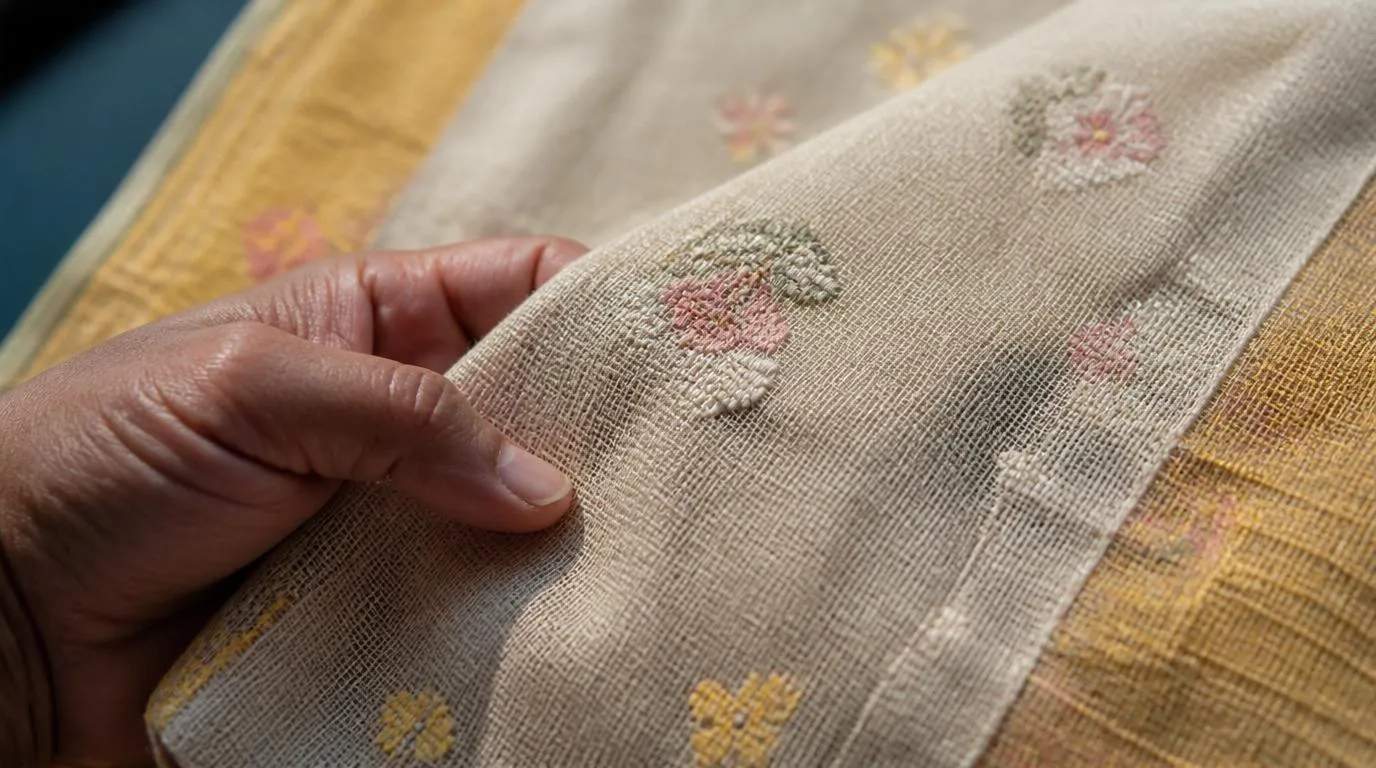
In genuine handloom Jamdani, the motifs are woven into the fabric using extra weft threads. This means the design is an integral part of the fabric – it's not embroidery or printing.
- Authentic handloom: Turn the saree over to the reverse side. You will see the motifs clearly visible – though slightly less defined than the front, they are unmistakably present. The pattern is mirrored on the back.
- Powerloom fake: The back side will be messy – you'll see floating threads, loose ends, or no visible motifs at all. If the design is printed or embroidered, the back will look blank or have a chaotic tangle of threads.
3. Look for Weave Irregularities – The Human Touch
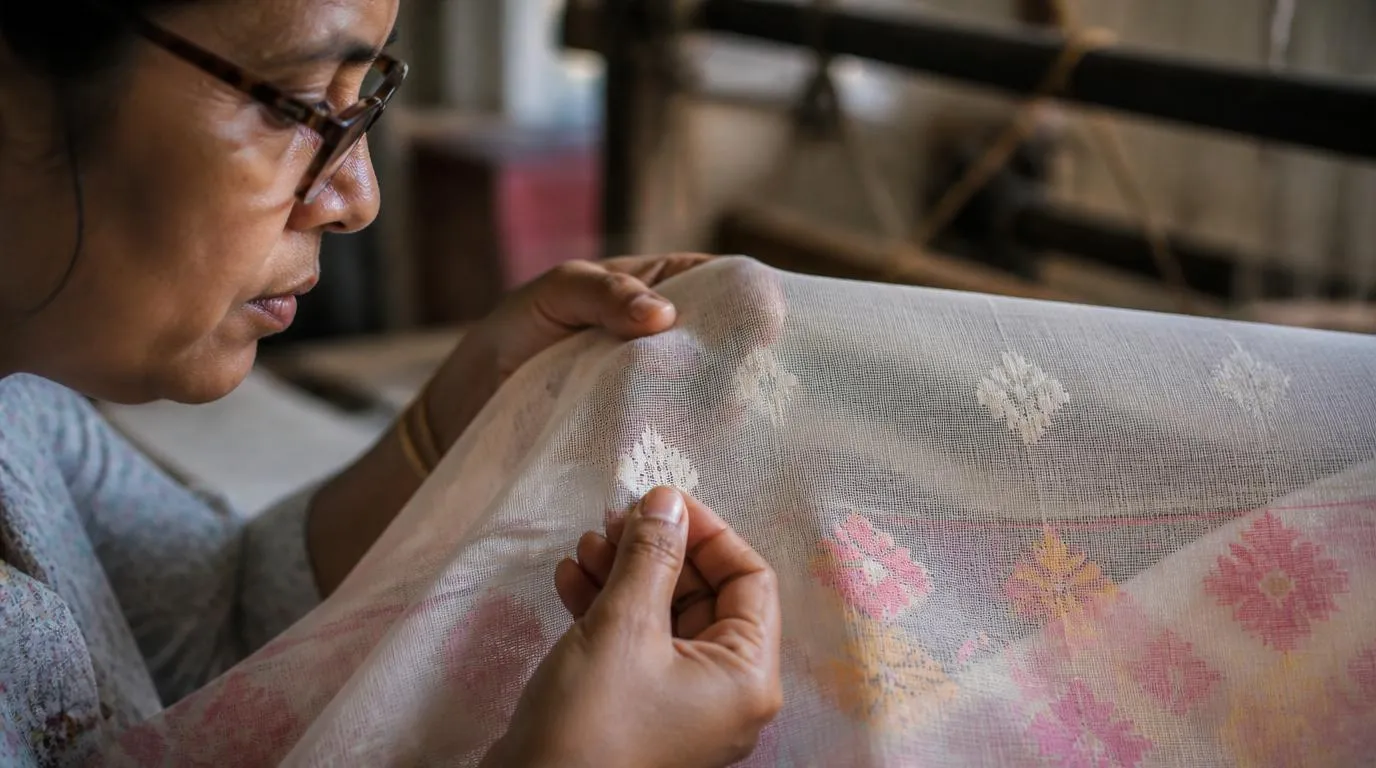
Handloom is made by human hands, not robots. This results in subtle variations that are actually a mark of quality.
- Authentic handloom: You'll notice slight irregularities – a thread that's a bit thicker here, a slight variation in the width of the border, or a tiny slub (a small bump) in the yarn. These are not defects; they are the signature of hand-weaving. The fabric feels organic and has a natural rhythm.
- Powerloom fake: The weave is perfectly uniform – every thread is identical, the borders are perfectly straight, and there are no irregularities. It looks almost too perfect, like a machine print.
How to check: Run your hand over the fabric. Handloom feels slightly textured and uneven, while powerloom feels flat and monotonous.
4. The Zari Burn Test – The Final Proof
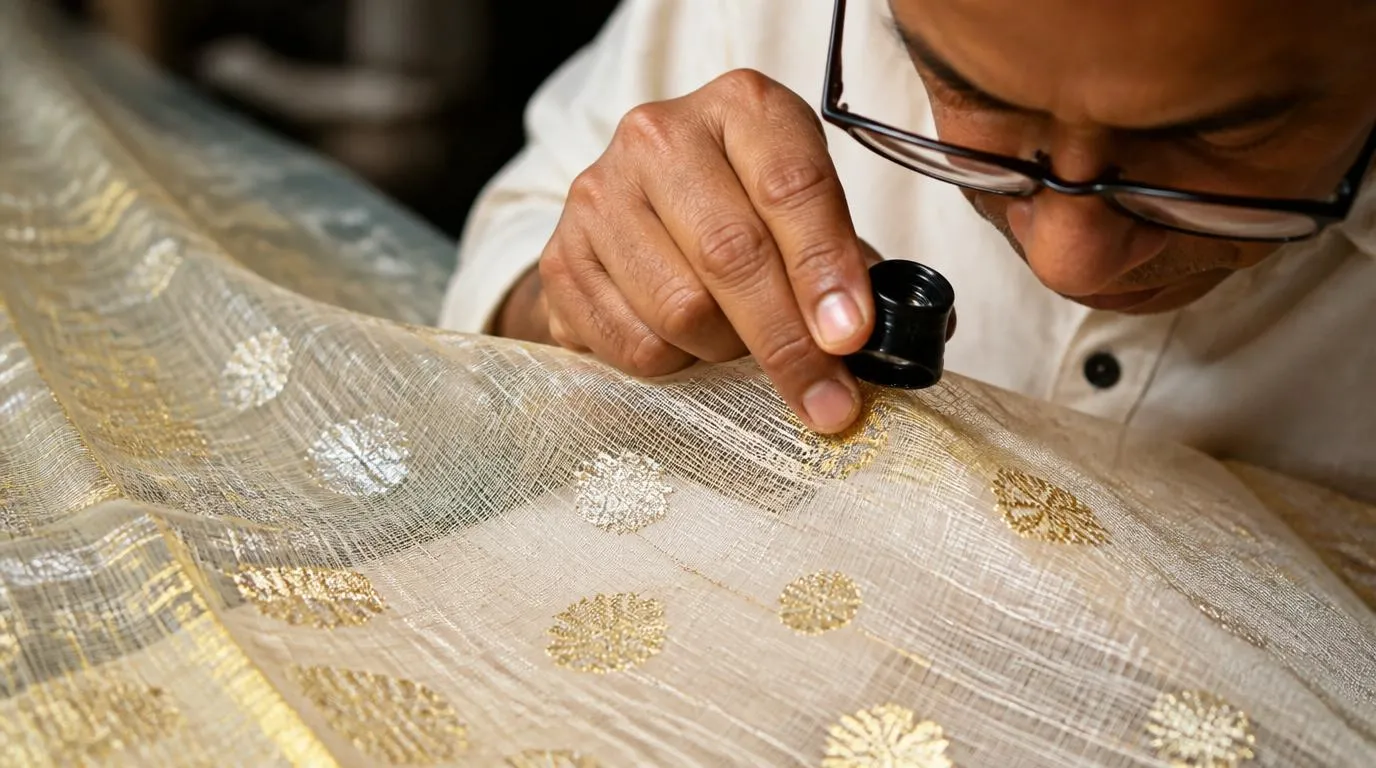
Zari – the gold or silver thread used in Jamdani borders and motifs – is a key indicator of authenticity. Powerloom copies often use cheap plastic or synthetic metallic threads.
- Authentic handloom: Genuine zari is made by wrapping a silver or gold-plated copper wire around a silk or polyester core. If you take a tiny thread of zari and burn it with a lighter, it will leave a metal residue (a small bead of metal) and smell faintly metallic. The core, if silk, will smell like burning hair; if polyester, like burning plastic.
- Powerloom fake: Fake zari is often plastic or synthetic foil. When burned, it melts, emits a strong plastic smell, and leaves a hard, plastic-like residue.
Caution: Do this test only on an inconspicuous thread (like a loose end) and with care, as fire is involved.
5. Feel and Weight – The Texture Tells
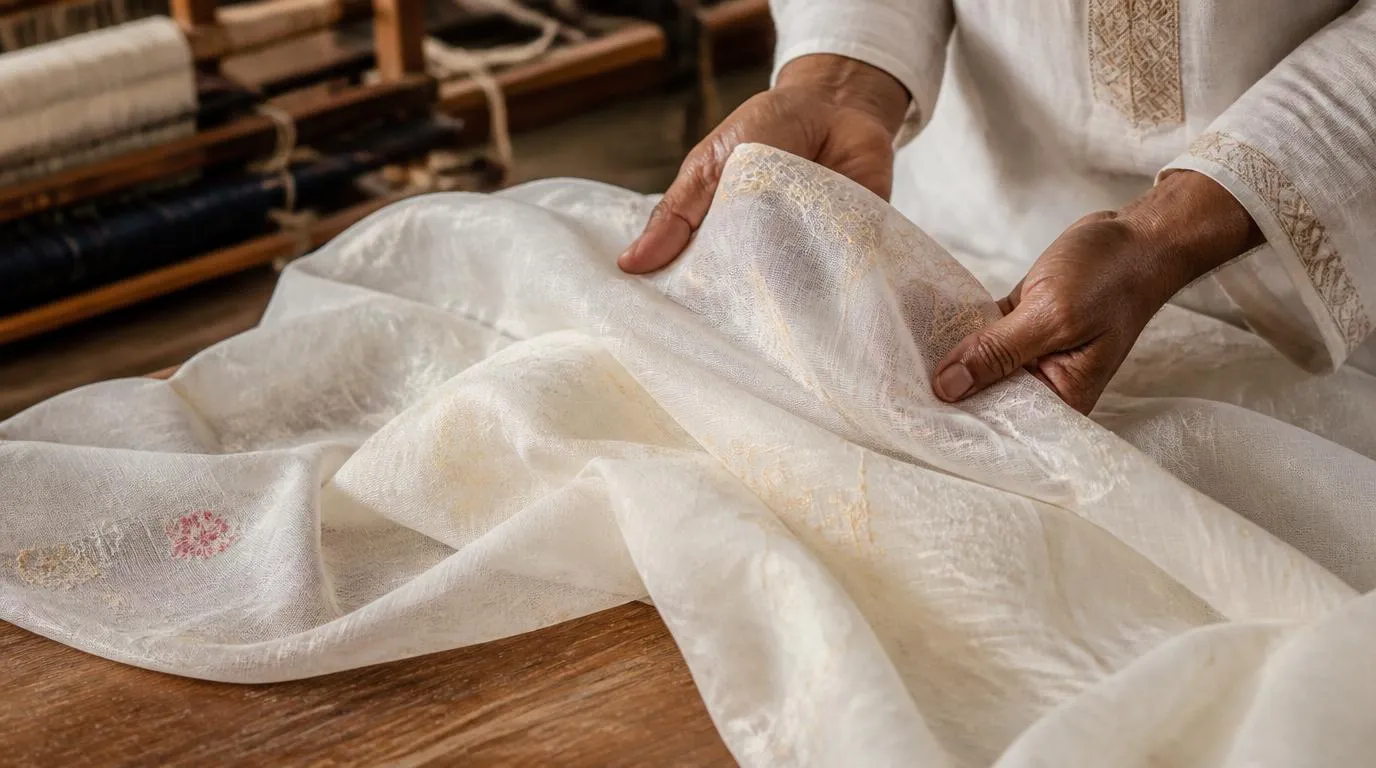
Authentic Jamdani is known for its lightness and airy feel – it's called "woven air" for a reason.
- Authentic handloom: Cotton Jamdani feels incredibly light and soft, almost like a gentle breeze. Silk Jamdani is slightly heavier but still drapes fluidly. The fabric is breathable and has a natural, subtle sheen (not a plastic gloss).
- Powerloom fake: Often feels stiff, papery, or has an unnaturally glossy finish due to chemical treatments. It may feel heavier than it should because of synthetic blends or starches added to mimic the handloom feel. Sometimes it feels slippery or plasticky.
How to check: Crumple a small part of the saree in your hand. Handloom Jamdani will spring back softly and not hold a harsh crease. Powerloom may wrinkle sharply or feel crunchy.
6. Motif Integration – Woven, Not Embroidered
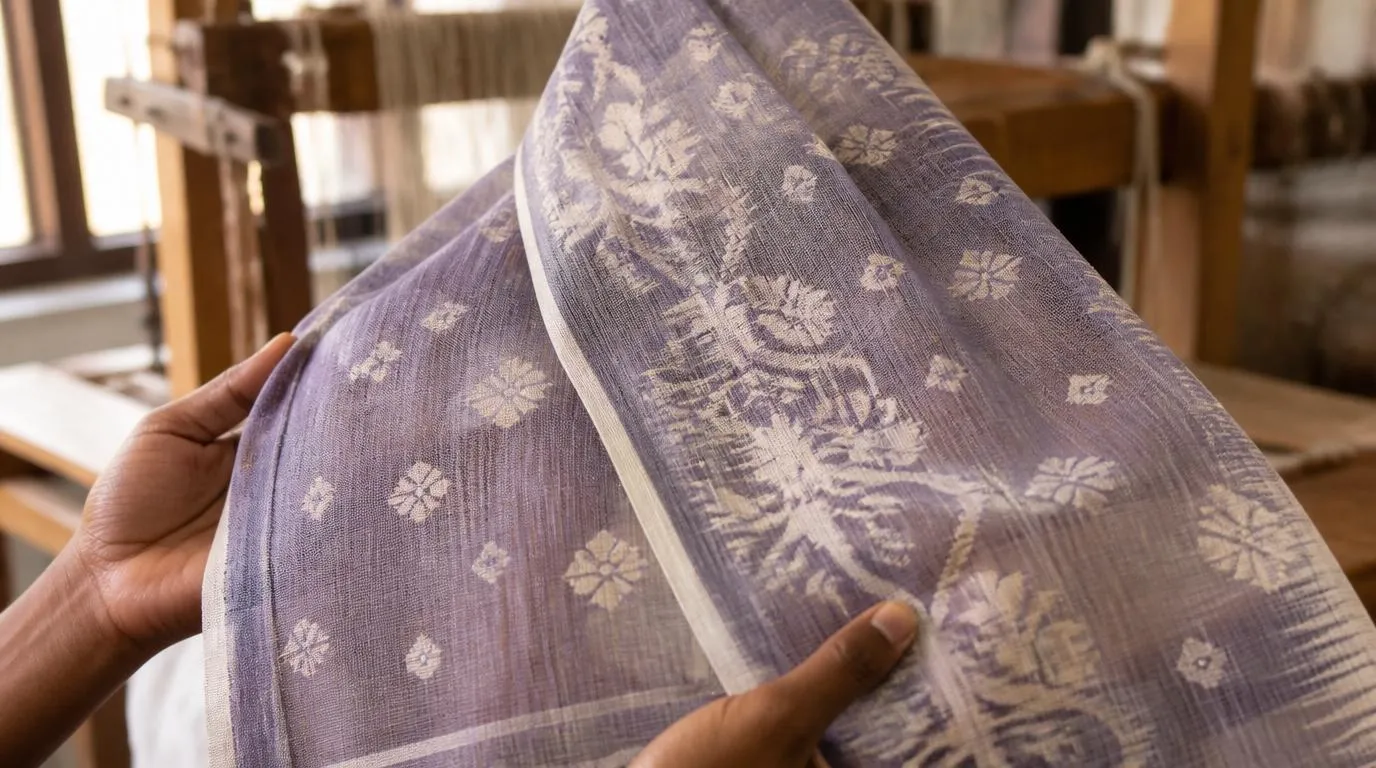
In genuine Jamdani, the motifs are not added after weaving – they are woven simultaneously with the base fabric using the extra-weft technique.
- Authentic handloom: The motifs are part of the fabric's weave. There is no visible stitching or embroidery on the surface. The design flows seamlessly with the fabric.
- Powerloom fake: Often, the motifs are embroidered on top or printed. Look closely at the edges of a motif – if you see stitches or raised threads that appear to be sewn on, it's not true Jamdani. Also, if the motif looks like a separate layer, it's likely machine-made.
Quick check: Gently stretch the fabric around a motif. In handloom, the motif will stretch with the fabric because it's woven in. In embroidered or printed copies, the motif will not stretch or may separate from the base.
7. Certification & Source – Know Your Seller
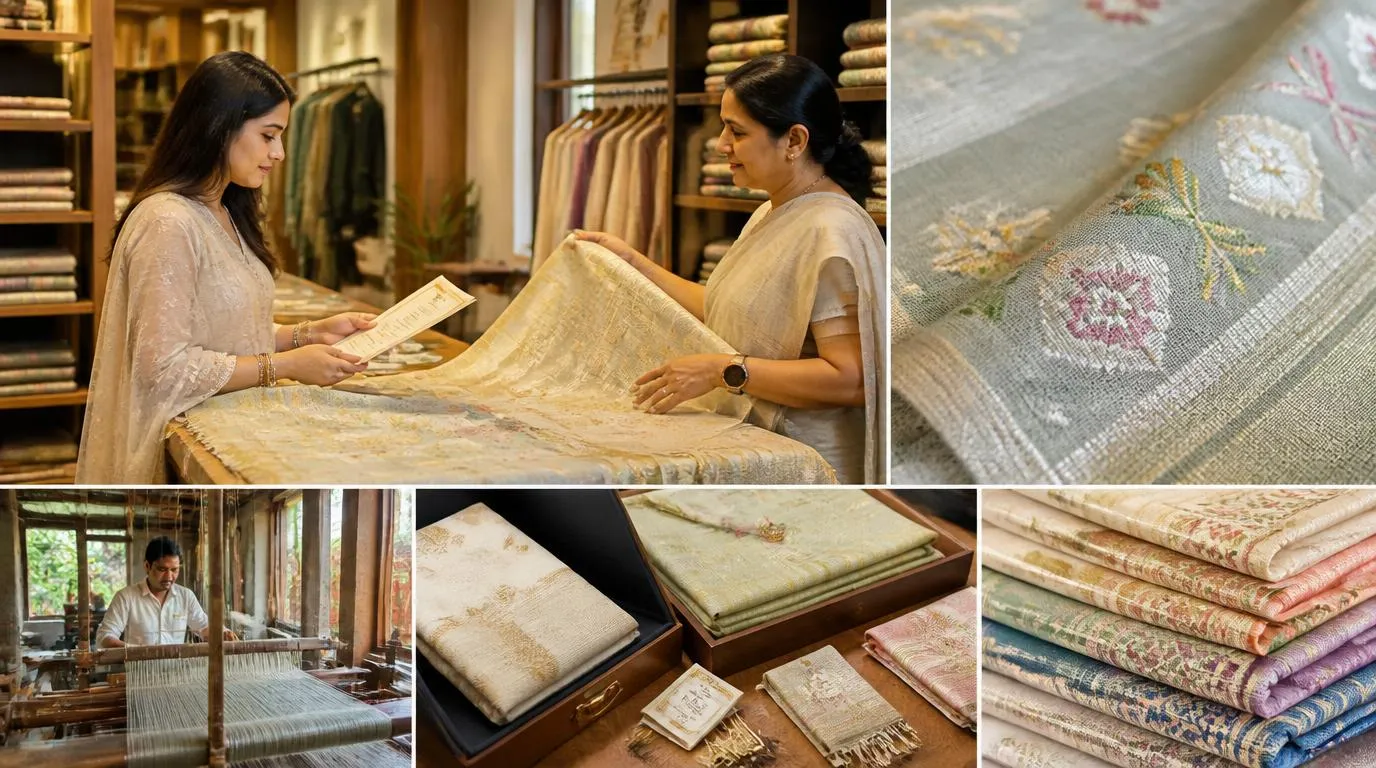
While not always foolproof, certifications and seller reputation are important indicators.
- Authentic handloom: Genuine Jamdani may come with a "Handloom" tag from the Bangladesh Handloom Board, weavers' cooperatives, or reputable brands like Aarong. These organizations maintain quality standards. Also, if you buy directly from weavers or from well-known handloom stores, you're more likely to get the real thing.
- Powerloom fake: Many powerloom sellers attach fake tags or use generic labels. They may claim "handmade" or "traditional" without any verification. Be wary of extremely low prices – if it seems too good to be true, it probably is.
My advice: Always buy from reputable sources. Look for sellers who provide detailed product descriptions, close-up photos of the weave and selvedge, and who clearly state "handloom" or "handwoven." If buying online, check reviews and customer photos.
Summary – Your Quick Authenticity Checklist
- ✅ Selvedge – tight, woven, no stitching
- ✅ Reverse side – motifs clearly visible
- ✅ Irregularities – slight variations, natural feel
- ✅ Zari – burn test leaves metal residue
- ✅ Feel – light, soft, breathable (not stiff/glossy)
- ✅ Motifs – woven in, not embroidered
- ✅ Seller – reputable, with certification or verifiable history