Introduction
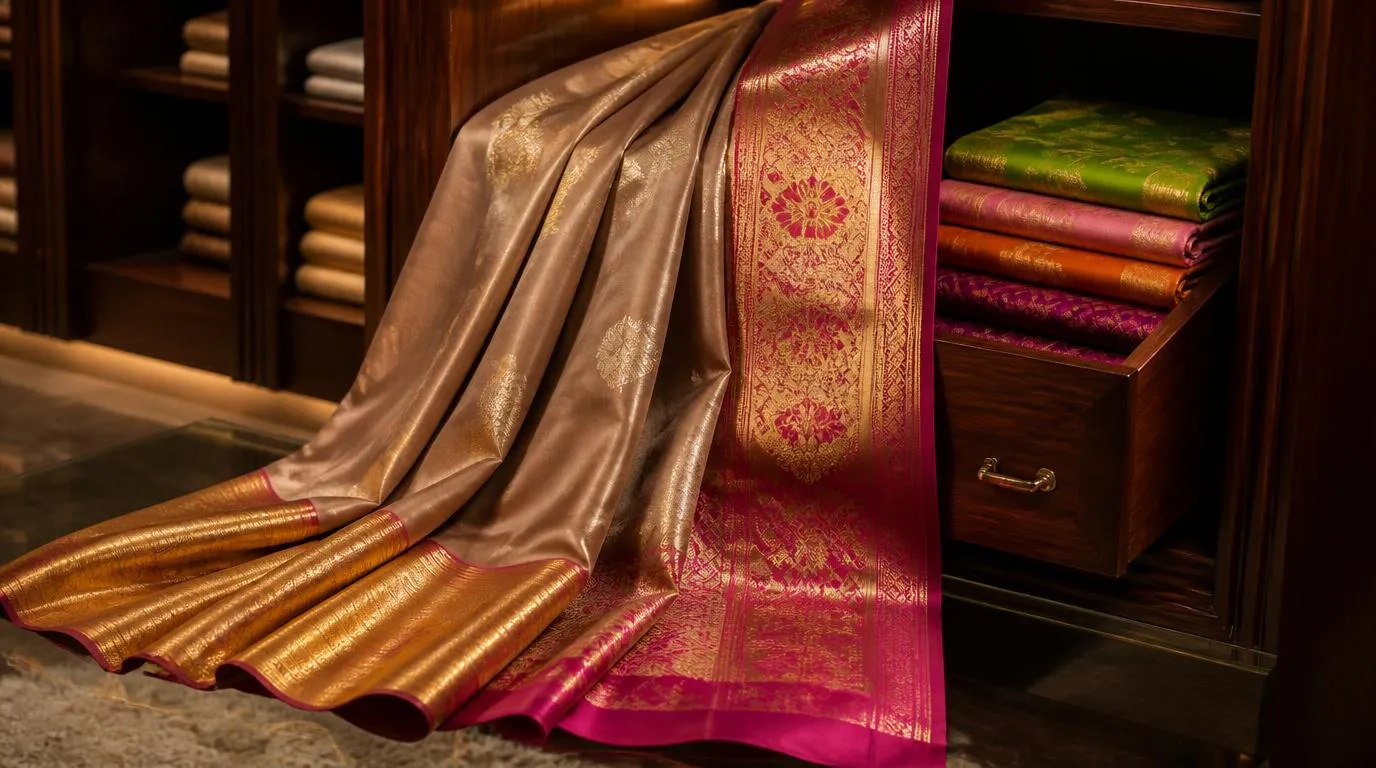
A silk saree is not just a piece of clothing – it's an investment, a heirloom, a piece of art. Whether it's a handwoven Jamdani, a lavish Benarasi, or a rustic Rajshahi silk, each saree carries the skill of generations of weavers. But silk is delicate. It can lose its sheen, get eaten by moths, or become brittle if not cared for properly.
I've learned these lessons the hard way – a beautiful Benarasi that developed water stains, a prized Jamdani that got caught in the monsoon humidity and lost its crispness. After years of experimenting (and a few heartbreaking mistakes), I've compiled the essential care tips that every silk saree owner needs to know. Follow these, and your silk sarees will stay beautiful for decades.
Table of Contents
1. Washing – Handle with Extreme Care
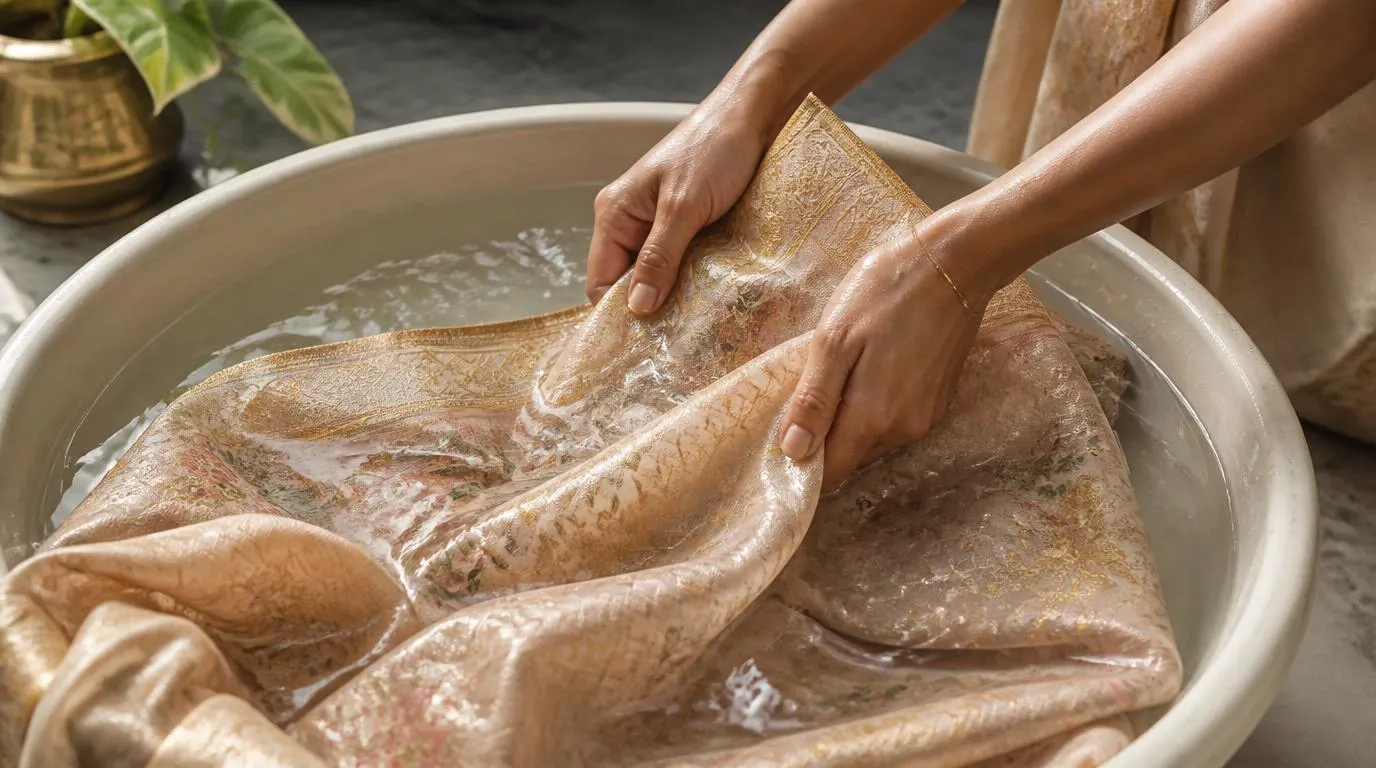
Rule #1: Never use hot water. Always use cold or lukewarm water. Hot water can shrink silk and fade the colors.
Rule #2: Use a mild, silk-specific detergent. Do not use regular laundry soap or bleach. There are gentle detergents available that are formulated for silk – they maintain the pH balance and preserve the sheen.
Rule #3: Hand wash only. Gently swish the saree in the soapy water for a few minutes. Never rub, scrub, or wring the fabric. For heavy zari work (like in Benarasi), it's safer to dry clean – the zari can get damaged in water.
Rule #4: Rinse thoroughly. Repeat rinsing in cold water until all detergent is removed. Any residue can dull the fabric.
2. Drying – Keep Away from Direct Sunlight
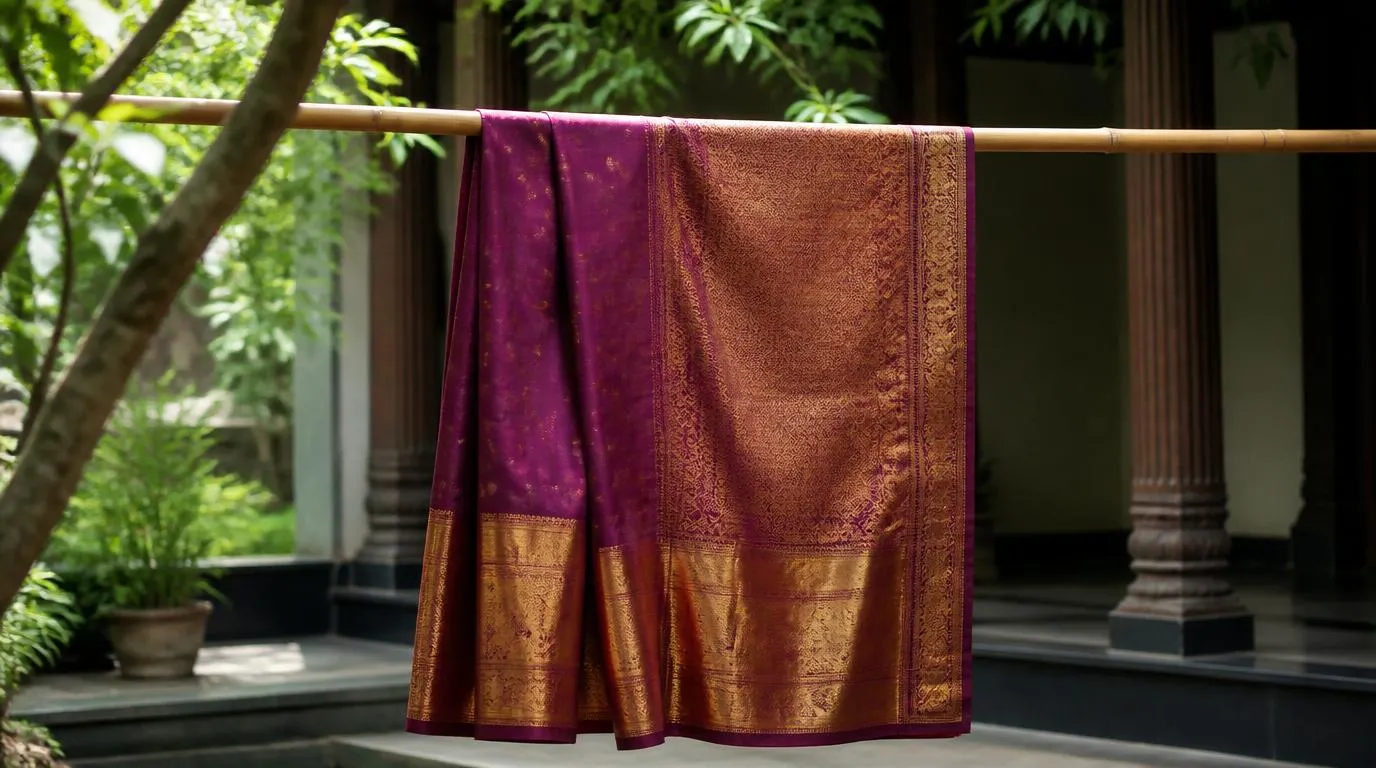
After washing, gently squeeze out excess water – never wring. Roll the saree in a clean, dry towel to absorb moisture.
Dry in shade: Direct sunlight can fade the colors and make the silk brittle. Always dry your silk saree in a cool, shaded area with good air circulation.
Use a padded hanger or flat surface: To avoid stretching, you can dry the saree flat on a clean cotton sheet or hang it on a padded hanger (not a thin wire hanger). If hanging, ensure the saree is evenly spread and not folded while wet.
Never tumble dry. Heat from dryers will ruin the silk fibers.
3. Storing – The Right Way Matters
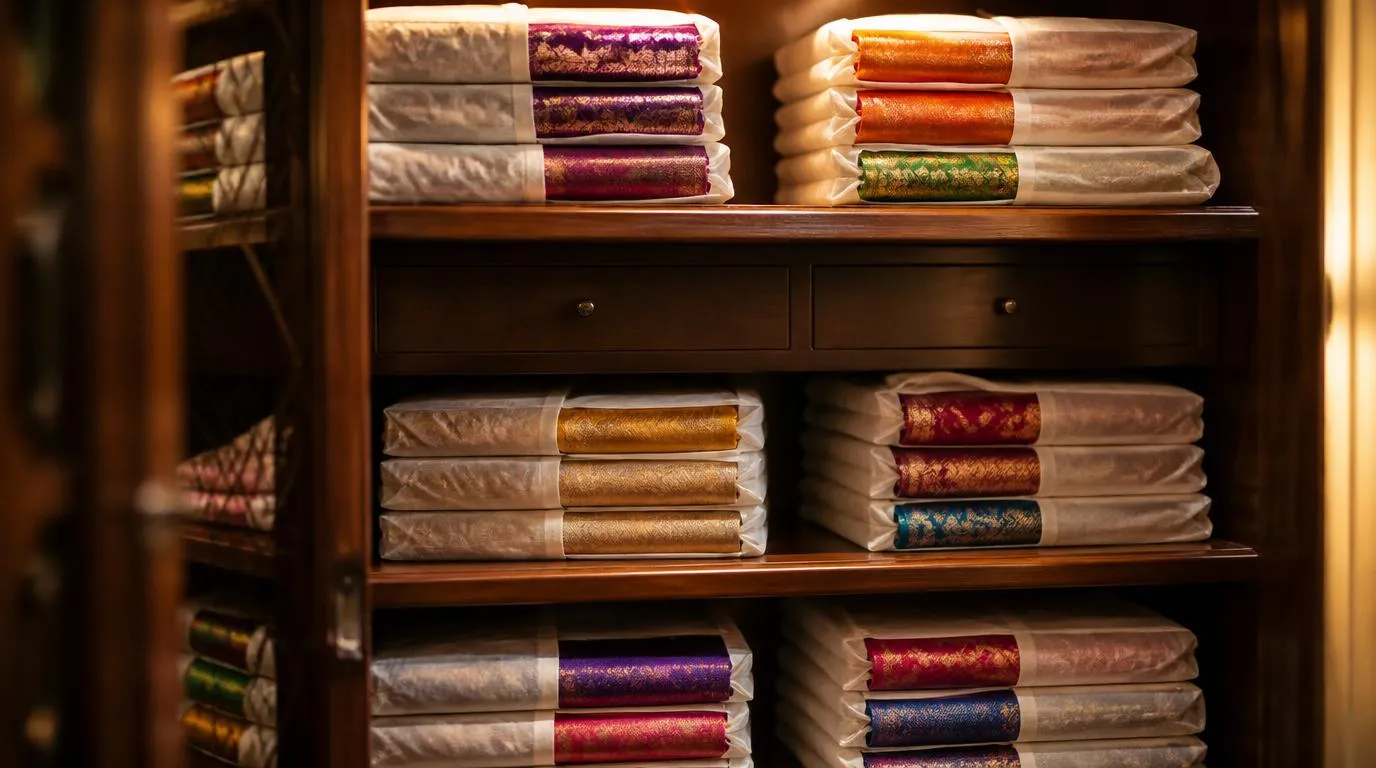
Always store in a cool, dry place. Avoid basements, attics, or areas with high humidity.
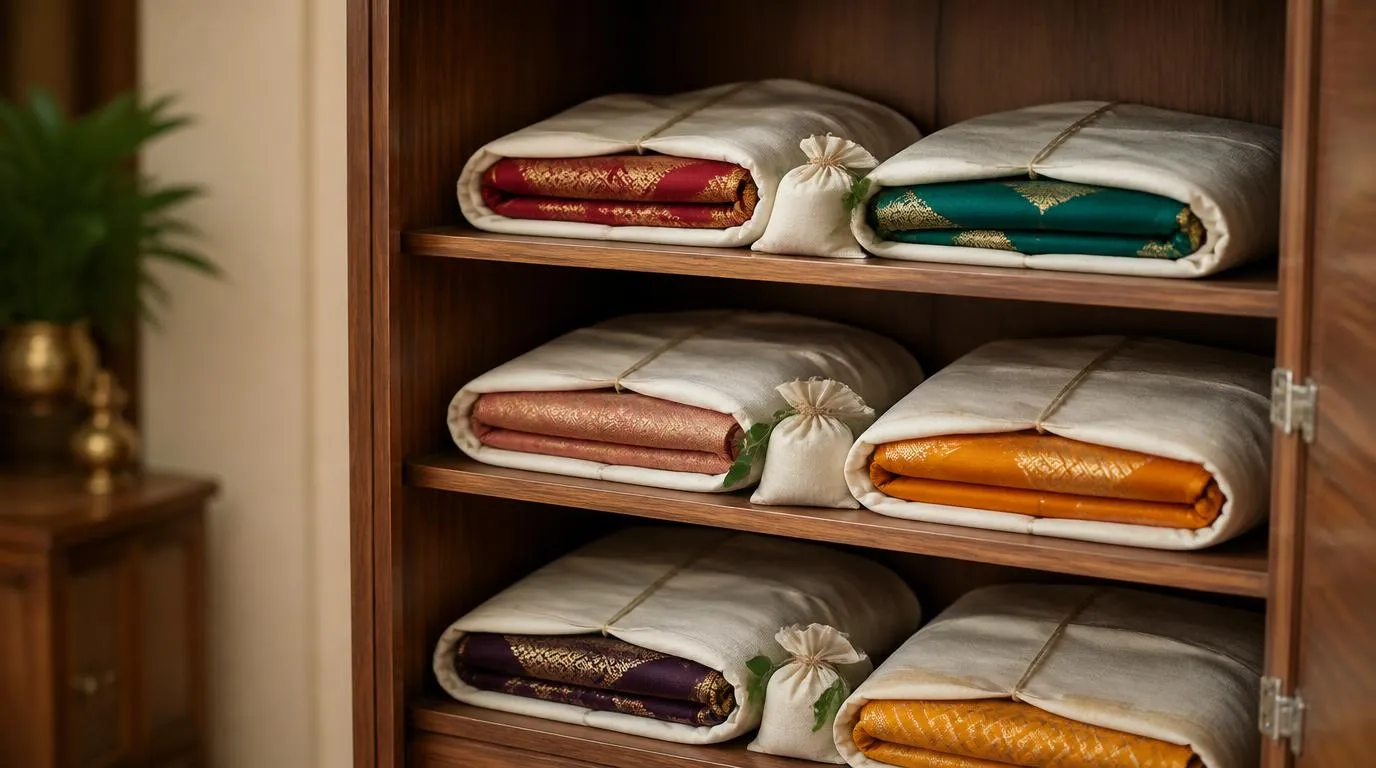
Wrap in muslin or cotton cloth. Never store silk in plastic bags – they trap moisture and can lead to mildew. Instead, use a breathable cotton or muslin cloth to wrap the saree.
Fold with the zari inward. For sarees with metallic zari, fold the saree so the zari part is not in direct contact with the outer layers – this prevents tarnishing and scratching.
Add natural moth repellents. Place neem leaves, cedar wood balls, or lavender sachets in the storage box. Avoid naphthalene balls – they can leave a strong smell and may affect the fabric over time.
Air them regularly. Every few months, take out your silk sarees and let them breathe in the shade for a few hours. This prevents moisture buildup.
4. Ironing – Low Heat, Inside Out
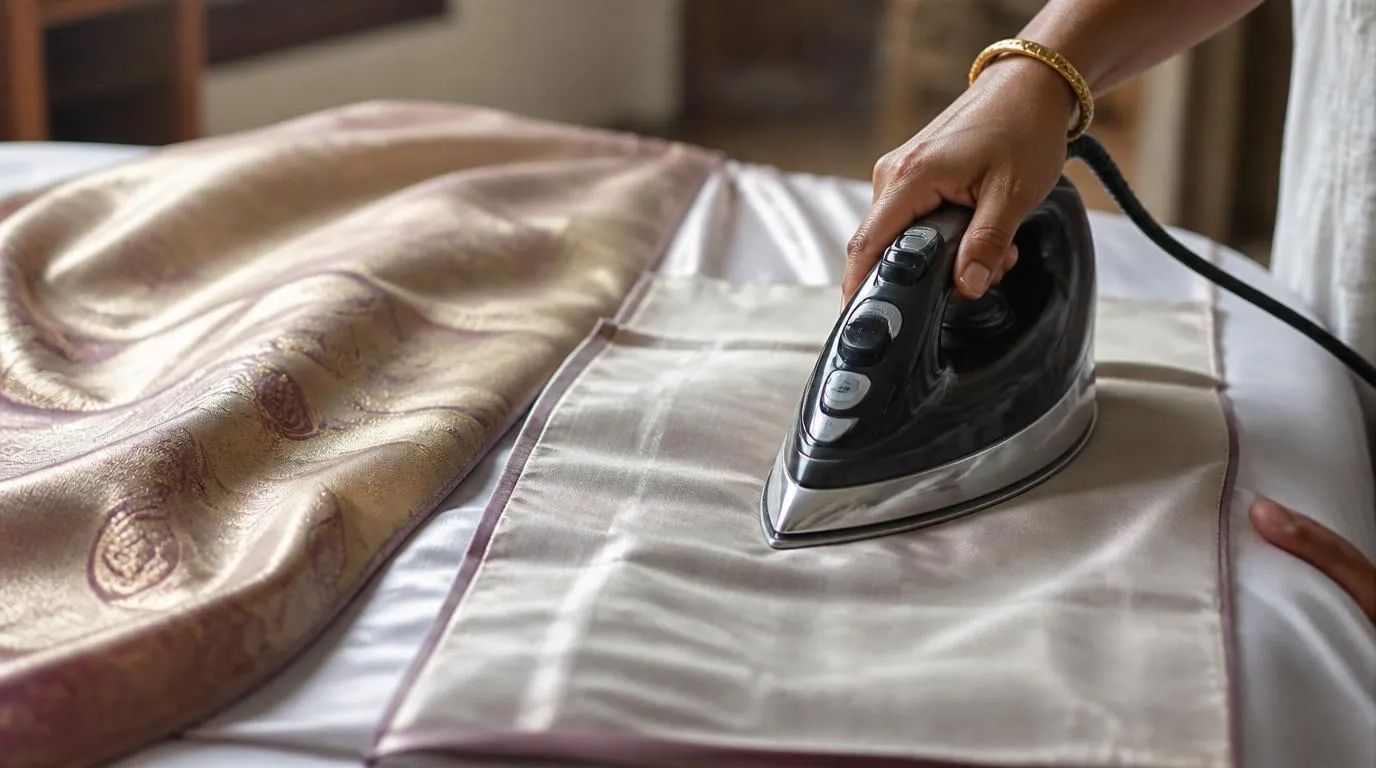
Always iron on the reverse side. Turn the saree inside out and iron the fabric. This protects the outer surface and the zari from direct heat.
Use the silk or low-heat setting. Never use high heat – it can scorch the fabric. If your iron doesn't have a silk setting, use the lowest possible temperature.
Use a pressing cloth. Place a clean, dry cotton cloth between the iron and the saree – even when ironing inside out. This provides an extra layer of protection.
No steam. Avoid steam irons – moisture can cause water spots on silk. If you must use steam, keep the iron at a distance.
For heavy zari work, it's best to avoid ironing the zari areas directly. Instead, iron the fabric around them.
5. Stain Removal – Act Quickly, But Gently
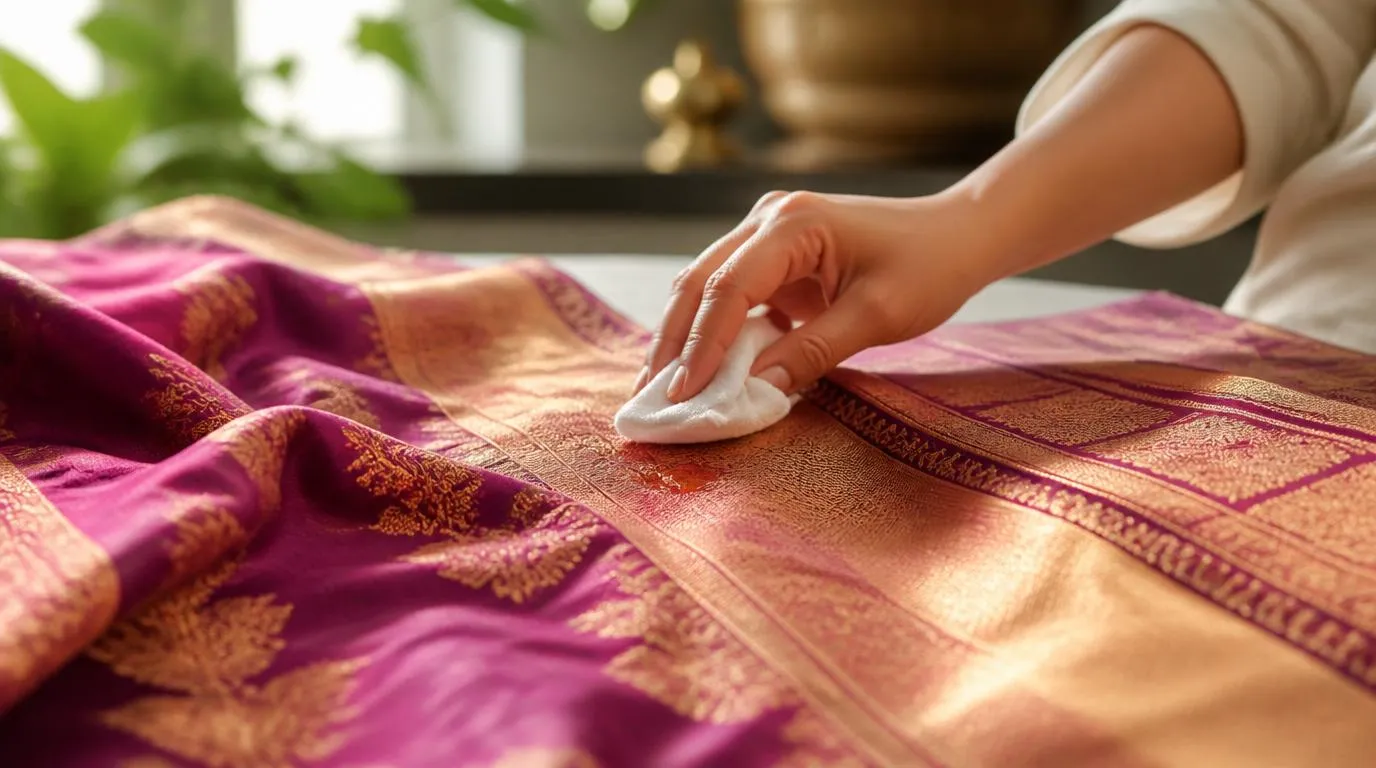
Blot, don't rub. If you spill something, gently blot the stain with a clean, white cloth. Rubbing will spread the stain and damage the fibers.
For oil-based stains: Sprinkle talcum powder or cornstarch on the stain and let it sit for a few hours to absorb the oil. Then brush off gently. For stubborn oil stains, take it to a dry cleaner.
For water-based stains (tea, coffee, etc.): Mix a small amount of mild silk detergent with cold water and dab the stain with a cloth. Rinse immediately with cold water. Do not let the stain dry – it becomes much harder to remove.
When in doubt, dry clean. If you're not sure about the type of stain or the fabric's reaction, take the saree to a professional dry cleaner immediately. Tell them it's a silk saree and mention the stain type.
6. Seasonal Care & Moth Prevention
Bangladesh's humid climate can be tough on silk. Here's how to protect your sarees through the seasons:
- Before the monsoon: Ensure all sarees are completely dry and free of any stains. Wrap them in fresh muslin and add extra neem leaves or dried orange peels to repel moths.
- During the rainy season: Check your sarees monthly for any signs of dampness or mildew. If you notice a musty smell, air them out in a shaded spot.
- After winter: If you've stored heavy silks during winter, unpack them, air them, and refold them (with the creases changed) to prevent permanent creases.
- Moth prevention: Neem leaves, dried lavender, or cedar chips are natural repellents. Place them in small cloth pouches inside your storage boxes. Replace them every 6 months.
Regularly rotating your sarees – wearing them occasionally – also helps keep the fibers supple.
Quick Care Checklist
- ✅ Washing: Cold water, mild detergent, hand wash, no wringing
- ✅ Drying: Shade, flat or padded hanger, no direct sun
- ✅ Storing: Muslin wrap, cool & dry place, natural moth repellents
- ✅ Ironing: Low heat, inside out, pressing cloth, no steam
- ✅ Stains: Blot immediately, use talc for oils, dry clean if unsure
- ✅ Seasonal: Air out regularly, change folds, check for moths