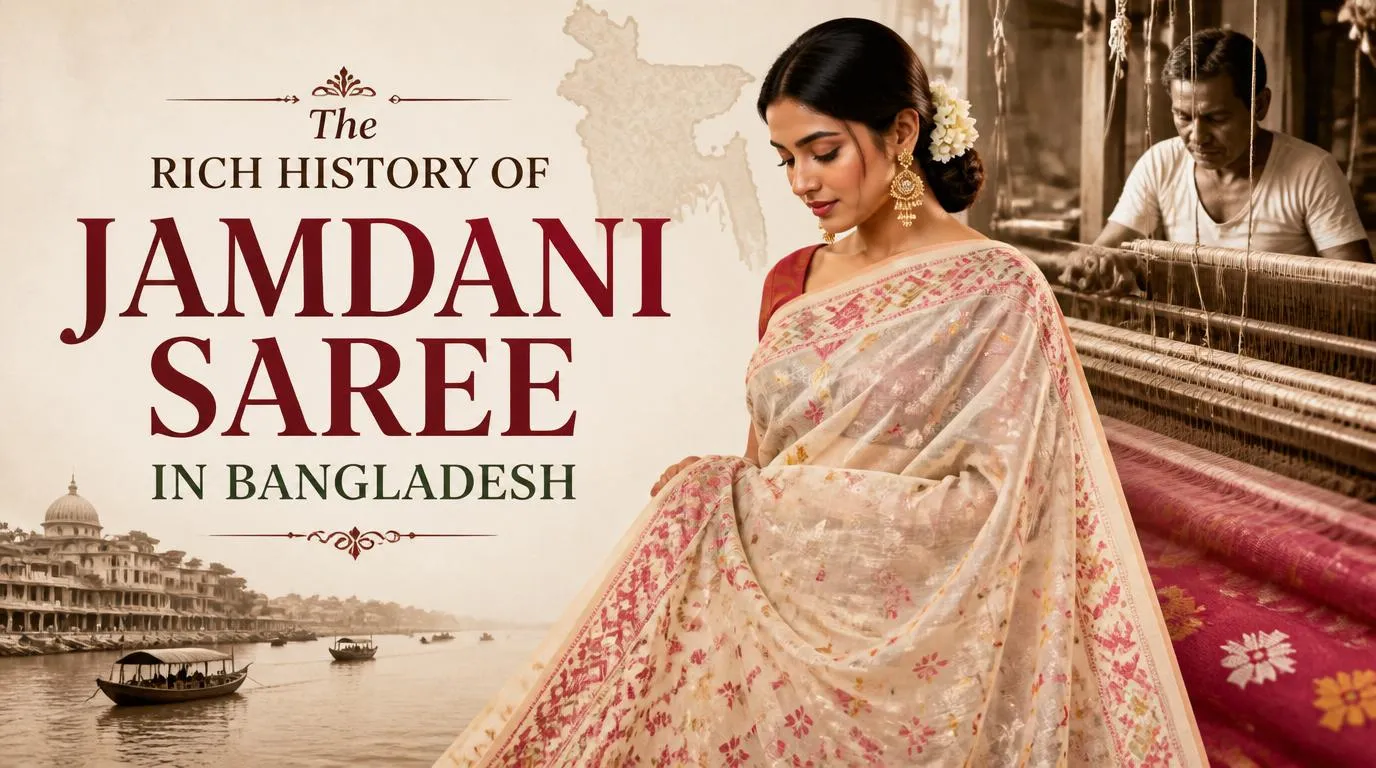
Introduction
Jamdani. The word itself carries the weight of centuries. It conjures images of Mughal empresses draped in gossamer-fine fabric, of Dhaka's bustling riverbanks where master weavers created magic with their hands, of a craft so exquisite that it captured the attention of emperors, traders, and now, the entire world.
But Jamdani is more than just a saree. It is the soul of Bengal's textile heritage. It has survived invasions, colonialism, industrialization, and near-extinction. Today, it stands as a symbol of Bangladeshi identity – recognized by UNESCO as an Intangible Cultural Heritage of Humanity. This is the story of how a humble handloom fabric became a national treasure.
Table of Contents
- Introduction
- Ancient Origins – The First Threads
- The Mughal Era – Golden Age of Jamdani
- British Colonial Period – Decline & Survival
- Post-Independence – Revival of a Heritage
- UNESCO Recognition – A Global Honor
- Jamdani Today – Tradition Meets Modernity
- Jamdani Timeline – Key Milestones
- FAQ: Jamdani History
Ancient Origins – The First Threads
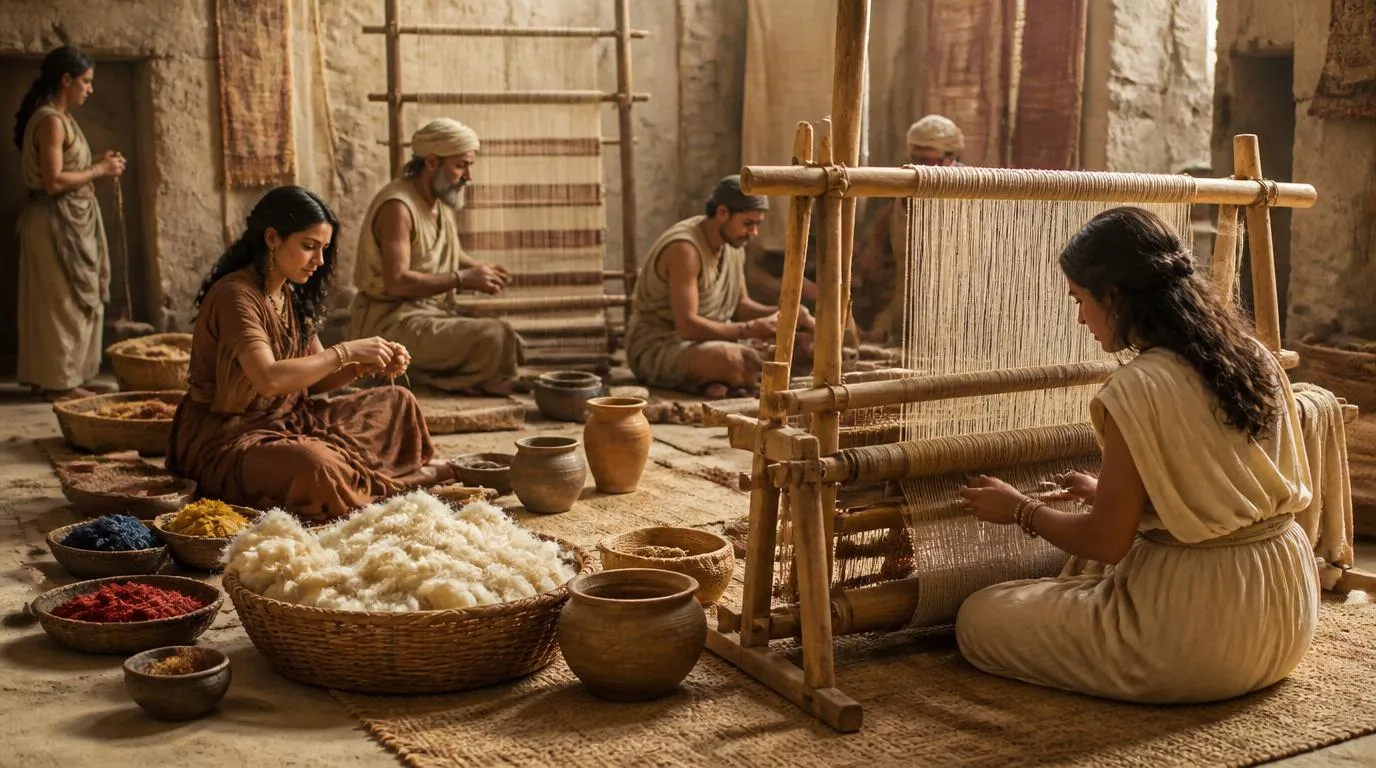
The origins of Jamdani weaving can be traced back over 2,000 years. The earliest references to fine cotton muslin from Bengal appear in ancient texts and Roman writings. The Greek historian Pliny the Elder (1st century CE) mentioned the fine cotton fabrics of Bengal, praising their quality and lightness.
The term "Jamdani" itself is believed to be derived from the Persian words "Jam" (flower) and "Dani" (vase or container), meaning "flower vase" – a reference to the intricate floral motifs that characterize the weave. However, the technique of figured weaving – where motifs are woven into the fabric using extra weft threads – was already practiced in Bengal long before the Persian influence.
Archaeological evidence from the Maurya and Gupta periods (c. 300 BCE – 600 CE) shows that Bengal was a major center of textile production. The region's warm, humid climate was perfect for cultivating the fine cotton needed for delicate muslin. The weavers of Bengal developed a unique technique: weaving the design directly into the fabric during the weaving process, rather than embroidering it afterward. This is the foundation of what we now call Jamdani.
The Mughal Era – Golden Age of Jamdani
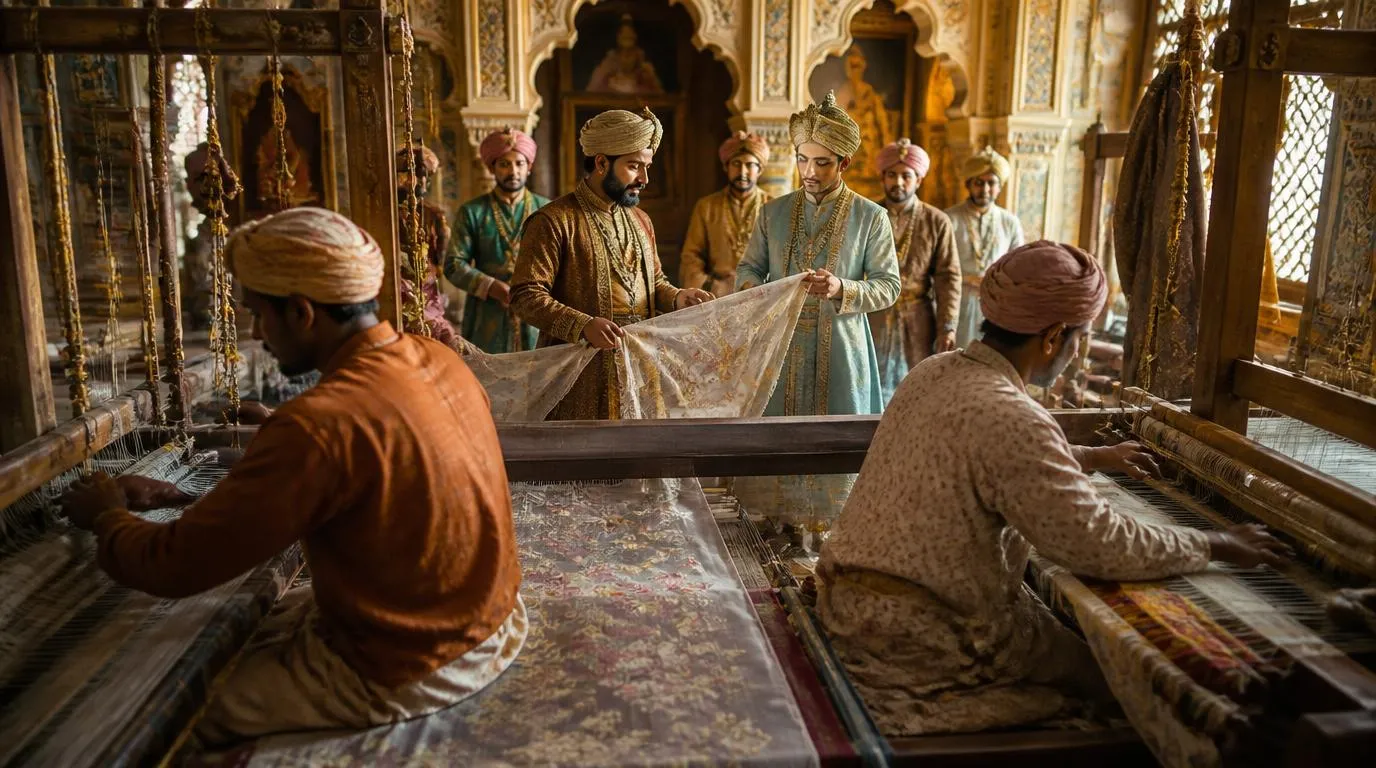
The Mughal period (16th to 18th centuries) was the true golden age of Jamdani. Under Mughal patronage, the craft flourished like never before. Dhaka, Sonargaon, and the surrounding areas became the epicenter of Jamdani weaving. Mughal emperors and nobility were avid patrons – they commissioned elaborate Jamdani fabrics for royal garments, turbans, and court attire.
It was during this period that Jamdani evolved from simple geometric patterns to the intricate floral, vine, and butidar (flower-bud) motifs that we still see today. The weavers drew inspiration from Mughal gardens, Persian miniature paintings, and the natural beauty of Bengal. The saree as we know it – a long, unstitched garment draped around the body – also became the preferred form of wearing Jamdani fabric for women.
The French traveler Jean-Baptiste Tavernier (17th century) described the muslin of Dhaka as "the finest and most beautiful in the world." Jamdani muslin was so fine that it was known as "Ab-i-Rawan" – flowing water, and "Baft-Hawa" – woven air. The fabric was so delicate that a six-yard saree could pass through a ring. This level of refinement came from using the finest cotton threads, some spun by hand to a fineness of 200 to 400 counts (compared to today's 60-120 counts).
British Colonial Period – Decline & Survival
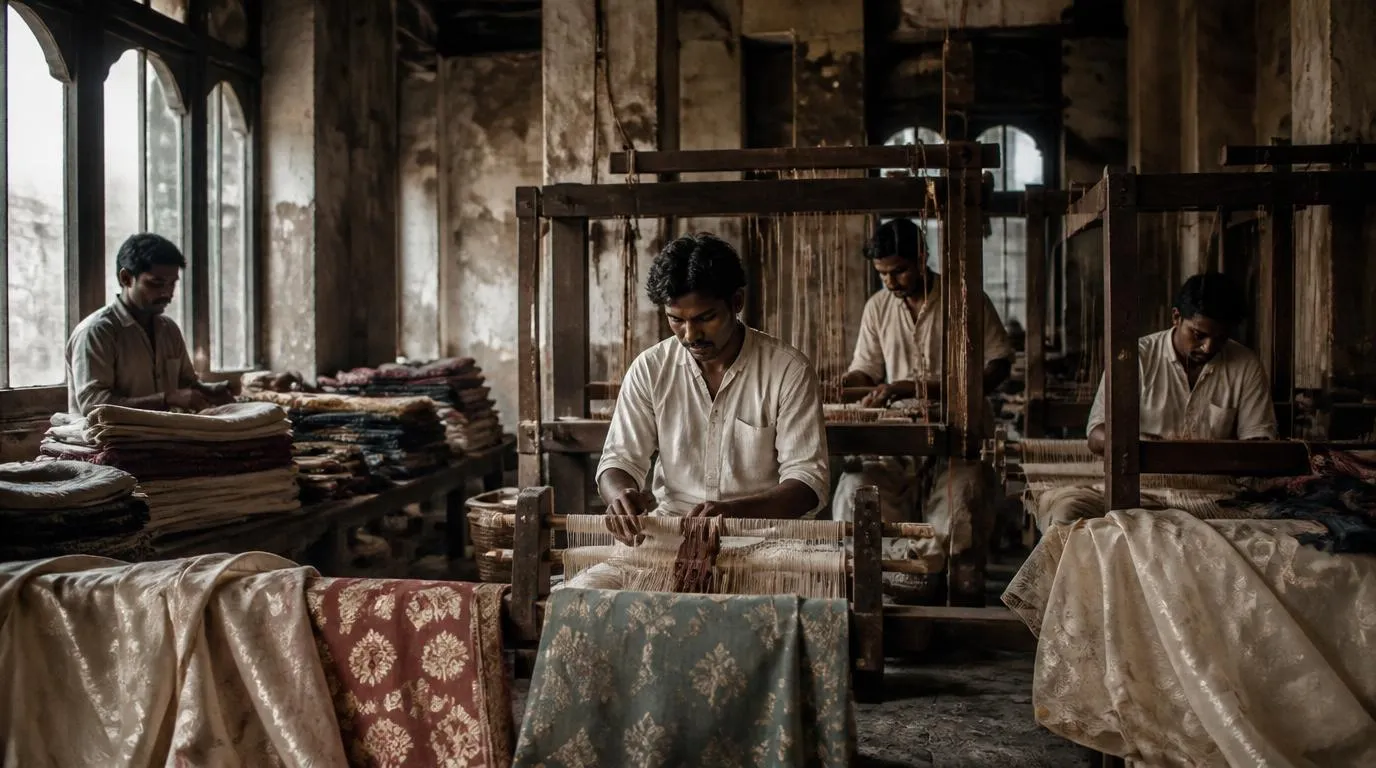
The arrival of the British East India Company in the 18th century marked the beginning of a difficult period for Jamdani. The British colonial administration imposed heavy taxes on handloom products and promoted the import of cheap, machine-made textiles from England. The fine muslin industry was systematically dismantled – weavers were forced to abandon their trade, and traditional knowledge began to disappear.
By the mid-19th century, the once-thriving Jamdani industry was on the brink of extinction. Many weavers migrated to other occupations or died in poverty. The craft survived only in small pockets – in Narayanganj, Tangail, and parts of Dhaka – where weavers continued their work in secret or for local patrons.
However, even in these dark times, Jamdani found unexpected champions. Some British and European textile enthusiasts wrote about the beauty of Jamdani, and a few wealthy zamindars (landlords) continued to commission pieces for family and ceremonial use. The craft never completely died – it was kept alive by the sheer dedication of the weavers who refused to let their heritage vanish.
Post-Independence – Revival of a Heritage
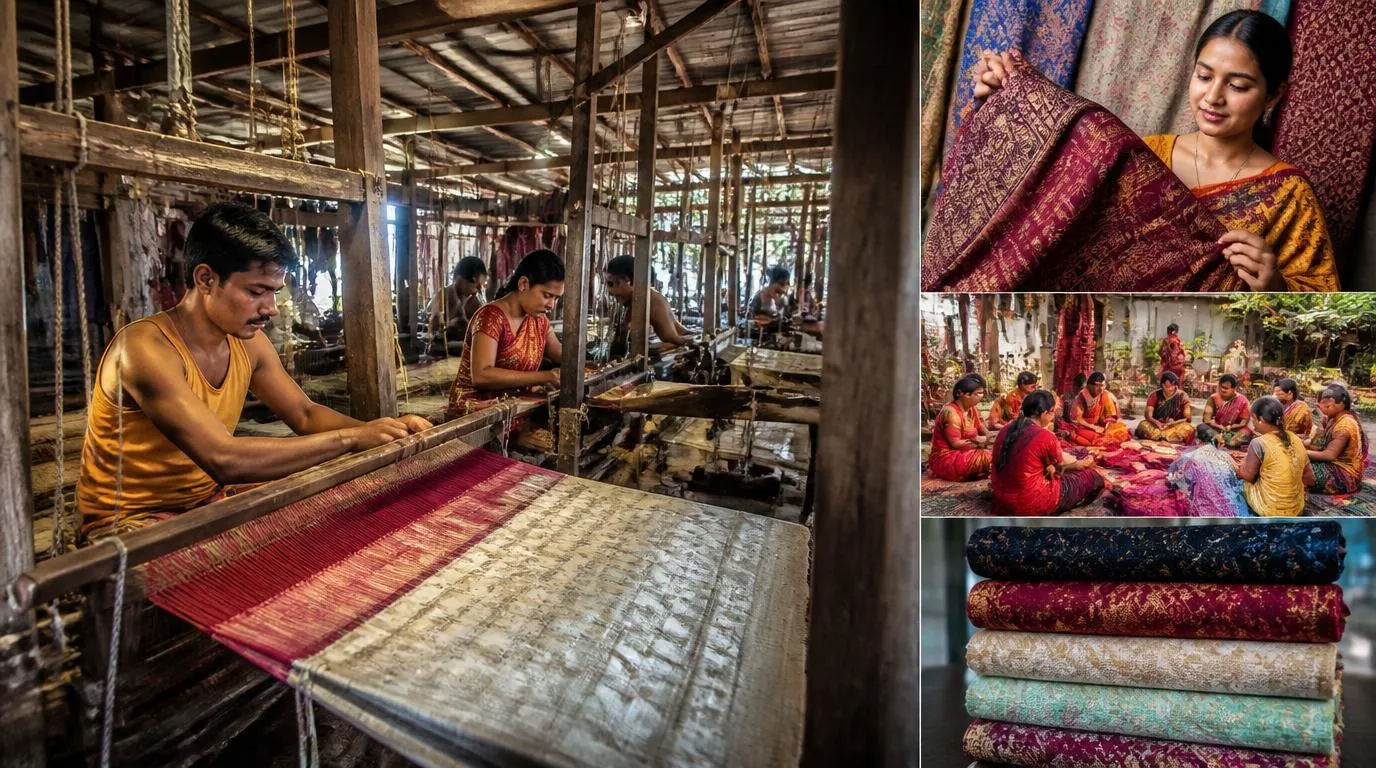
After the partition of India in 1947, and especially after Bangladesh's independence in 1971, there was a renewed interest in Jamdani as a symbol of cultural identity. The new nation of Bangladesh embraced its handloom heritage as a source of national pride.
In the 1970s and 1980s, the government and various NGOs began programs to support and revive Jamdani weaving. Training centers were established, and weavers were given access to better raw materials and market connections. The demand for Jamdani sarees grew among urban women, and the craft began to regain its lost glory.
The 1990s and 2000s saw Jamdani become a fashion statement – not just in Bangladesh but also among the diaspora and in the international market. Contemporary designers started incorporating Jamdani into modern ensembles – saris, salwar kameez, dupattas, and even Western-style dresses. The traditional motifs were adapted to new color palettes and patterns, appealing to a younger generation while preserving the essence of the craft.
UNESCO Recognition – A Global Honor
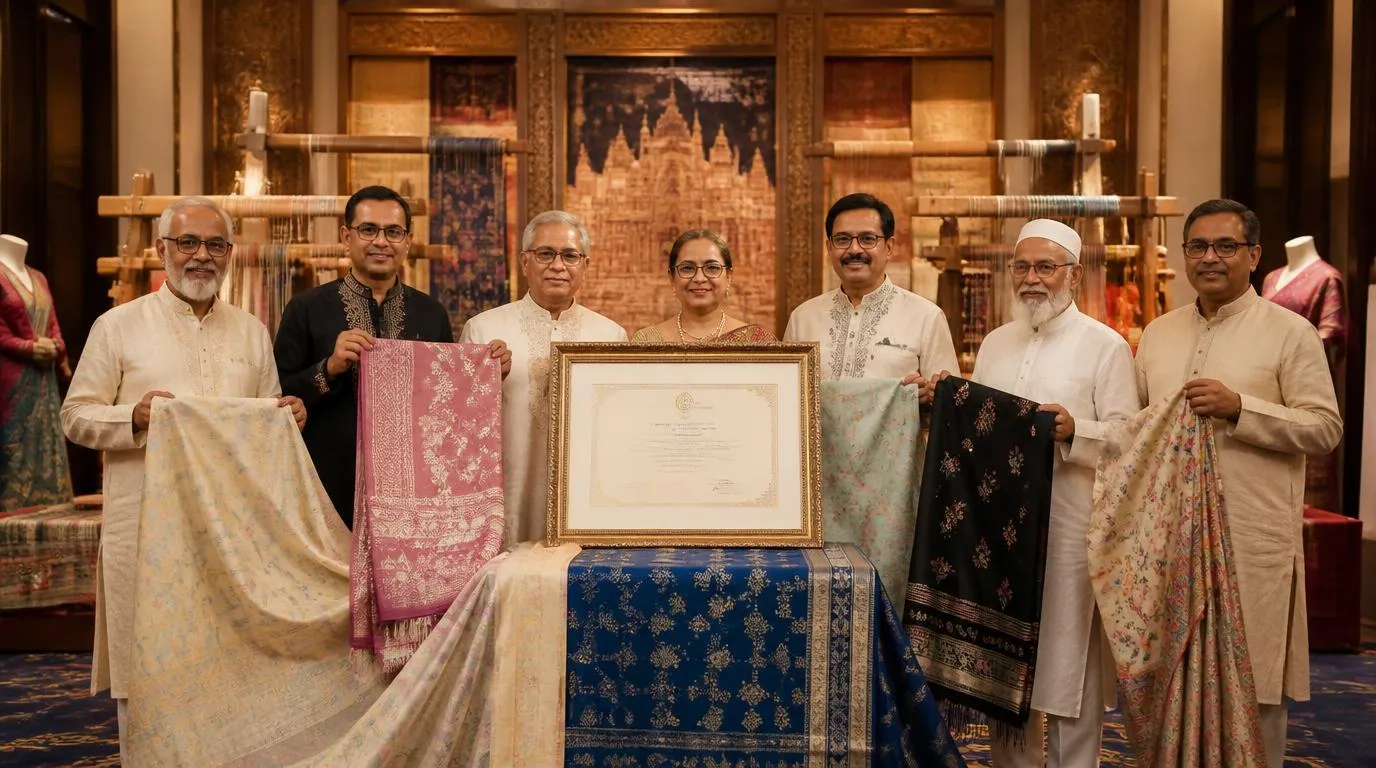
In 2013, Jamdani weaving achieved global recognition when UNESCO inscribed it on the Representative List of the Intangible Cultural Heritage of Humanity. The nomination was submitted by Bangladesh and recognized the "Traditional art of Jamdani weaving" as a living heritage that needs to be protected and promoted.
The UNESCO citation highlighted the intricacy of the craft – the fact that Jamdani is woven on pit looms, using the "figured" weave technique where designs are created directly on the loom. It also emphasized the social and cultural significance of Jamdani in Bangladeshi society – how it is passed down from mother to daughter, how it is worn on special occasions, and how it represents the identity of the Bengali people.
This recognition brought renewed attention to the craft. It led to increased funding for preservation, training programs for new weavers, and greater market access for authentic Jamdani products. It also created awareness among consumers about the importance of buying genuine handloom Jamdani rather than cheap imitations.
Jamdani Today – Tradition Meets Modernity
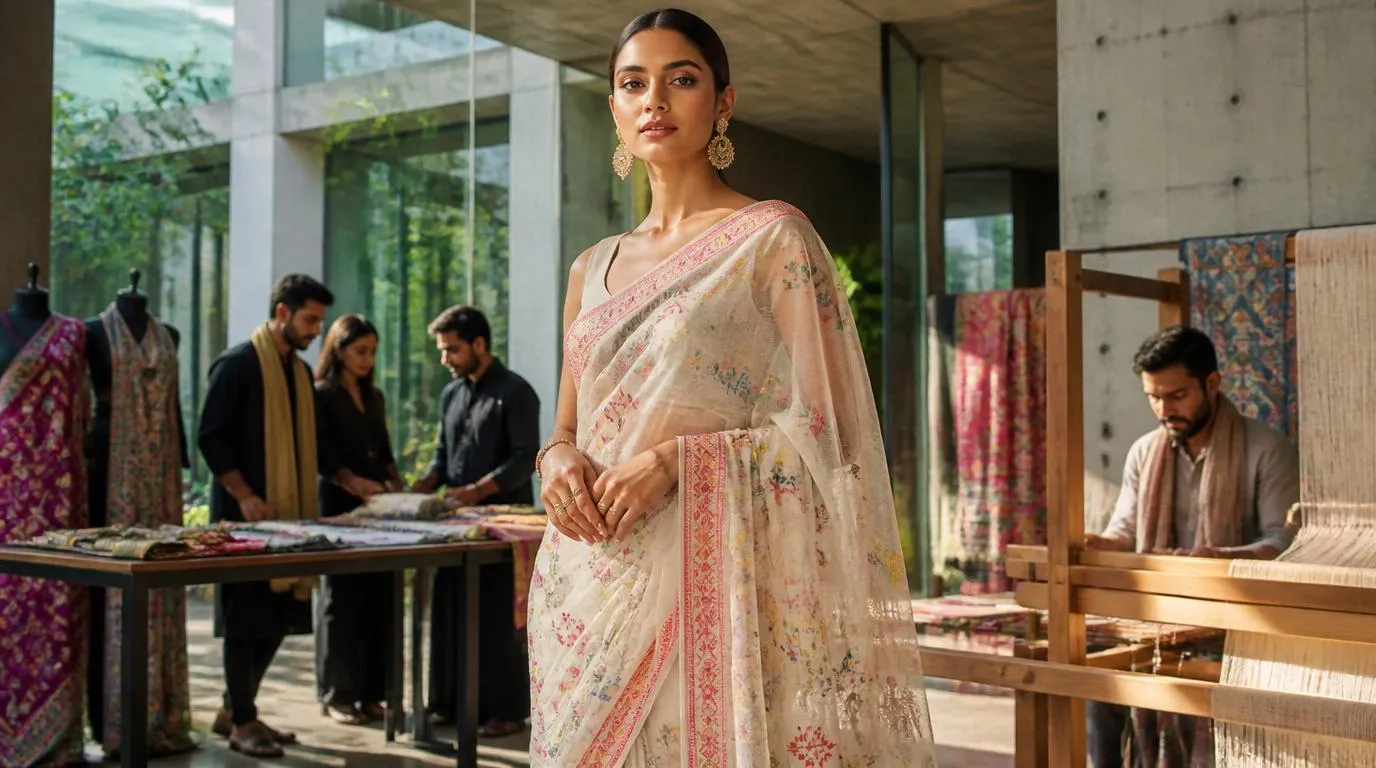
Today, Jamdani is more vibrant than ever. The craft has adapted to the 21st century while staying true to its roots. Here's what Jamdani looks like in the modern era:
- Innovative designs: While traditional floral and butidar motifs remain popular, contemporary weavers are experimenting with geometric patterns, abstract designs, and even the incorporation of modern motifs like cityscapes and architectural elements.
- Fusion fashion: Jamdani fabric is now used not only for sarees but also for kurtas, dupattas, lehengas, and even Western-style blazers and dresses. This has opened the craft to a global audience.
- Online marketplaces: Platforms like Daraz and specialized handloom websites have made Jamdani accessible to buyers worldwide. You can now purchase authentic Jamdani from the comfort of your home – with the caveat that you need to know how to spot the genuine article.
- Weaver empowerment: Organizations like BRAC, the Bangladesh Handloom Board, and various NGOs are working to improve the livelihoods of weavers – providing fair wages, health insurance, and training in business and marketing skills.
- Export growth: Bangladeshi Jamdani is now exported to countries around the world – from India and Sri Lanka to the UK, USA, and the Middle East. The craft has become a significant contributor to Bangladesh's textile exports.
However, challenges remain. The number of skilled weavers is declining – younger generations are often attracted to better paying urban jobs. Powerloom imitations flood the market, confusing consumers and undercutting authentic weavers. There's also the risk of the craft becoming too commercialized, losing its soul in the rush to meet market demand.
Jamdani Timeline – Key Milestones
- 3rd century BCE – 6th century CE: Early references to Bengal's fine cotton textiles in ancient texts and Roman writings.
- 10th – 15th centuries: Jamdani weaving develops as a distinct art form under Buddhist and Hindu rulers in Bengal.
- 16th – 18th centuries (Mughal Era): Golden age of Jamdani. Dhaka and Sonargaon become centers of the craft. Intricate floral motifs and butidar designs evolve.
- Late 18th – 19th centuries (British colonial period): Decline of handloom industry. Jamdani weaving nearly dies out.
- Early 20th century: Small-scale revival by zamindars and local patrons.
- 1947 – 1971: Post-partition and Bangladesh independence – renewed interest in Jamdani as cultural heritage.
- 1970s – 1990s: Government and NGO programs support revival. Weavers trained and connected to markets.
- 2013: UNESCO recognizes Jamdani weaving as an Intangible Cultural Heritage of Humanity.
- 2020s: Jamdani goes global – online sales, fusion fashion, and growing export market.