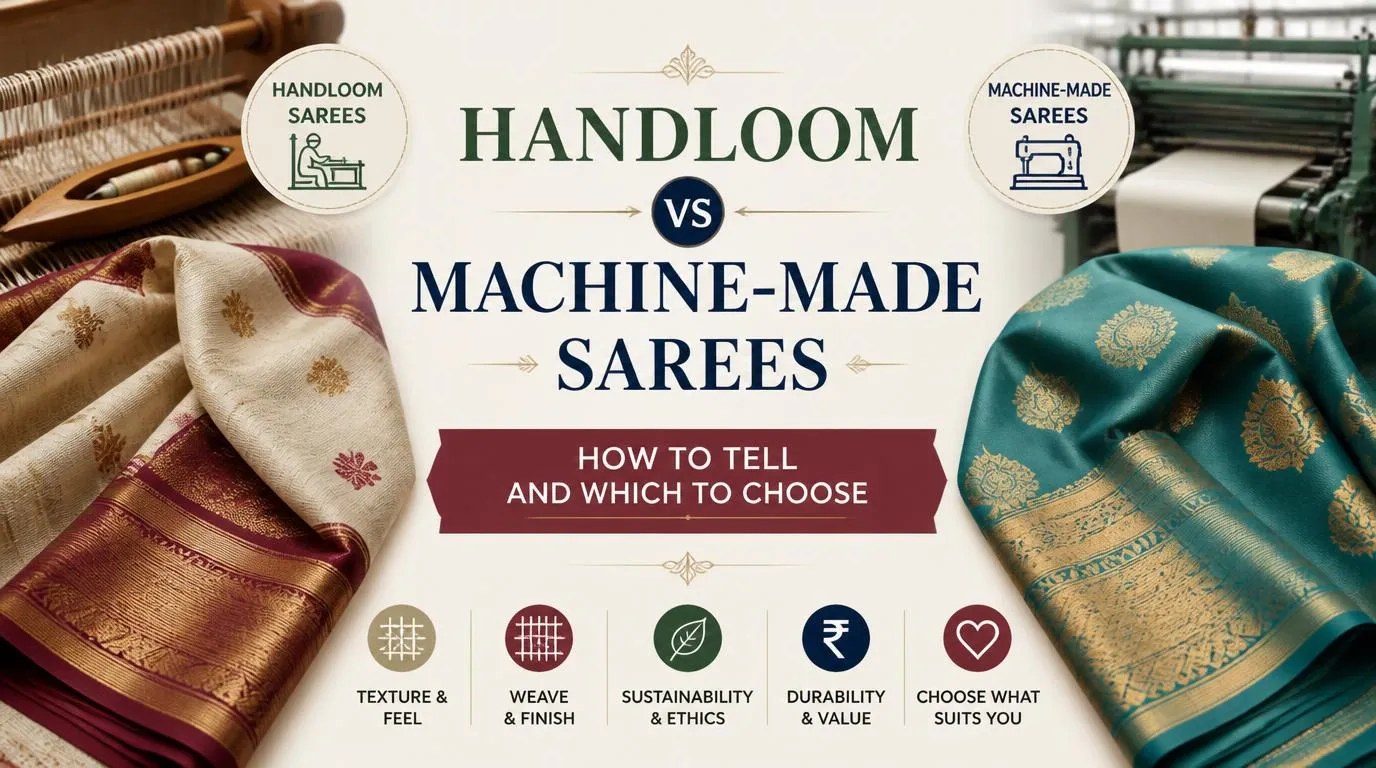
Introduction
You walk into a saree shop, and your eyes are met with a dazzling array of colors and textures. The prices range from ৳500 to ৳50,000. You pick up a beautiful Jamdani and wonder – is this handloom or machine made? Does it even matter?
It does. The difference between handloom and machine made sarees goes beyond just the price tag. It affects how the saree feels on your skin, how long it lasts, how it drapes, and even the lives of the people who made it. In this guide, we'll break down everything you need to know – so you can make an informed choice that aligns with your budget, values, and style.
Table of Contents
What is Handloom?
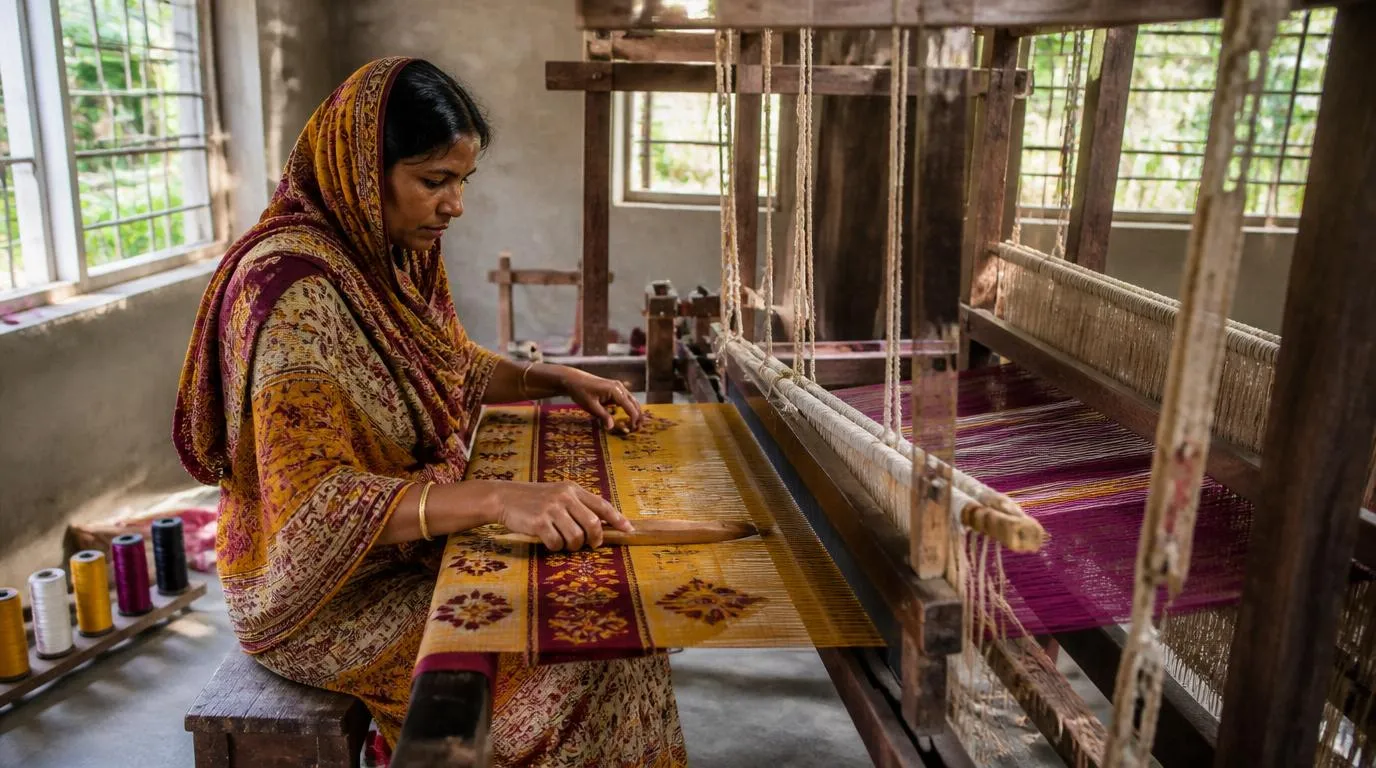
Handloom refers to fabric woven on a loom that is operated entirely by human hands – no electricity, no motors, no automated machinery. The weaver uses their hands and feet to control the shuttle, the warp, and the weft, creating each saree thread by thread.
In Bangladesh, handloom weaving is an ancient tradition. From the famous Jamdani of Dhaka to the Tangail sarees and Rajshahi silk, these are all products of skilled artisans who have inherited techniques passed down through generations. A single handloom saree can take anywhere from a few days to several months, depending on the intricacy of the design.
Characteristics of handloom sarees: Each saree is unique. You'll find slight irregularities – a little unevenness in the weave, minor slubs, and variations in the border – that are signatures of human craftsmanship. The fabric has a soft, breathable feel and a natural sheen that only comes from hand-weaving.
What is machine made?
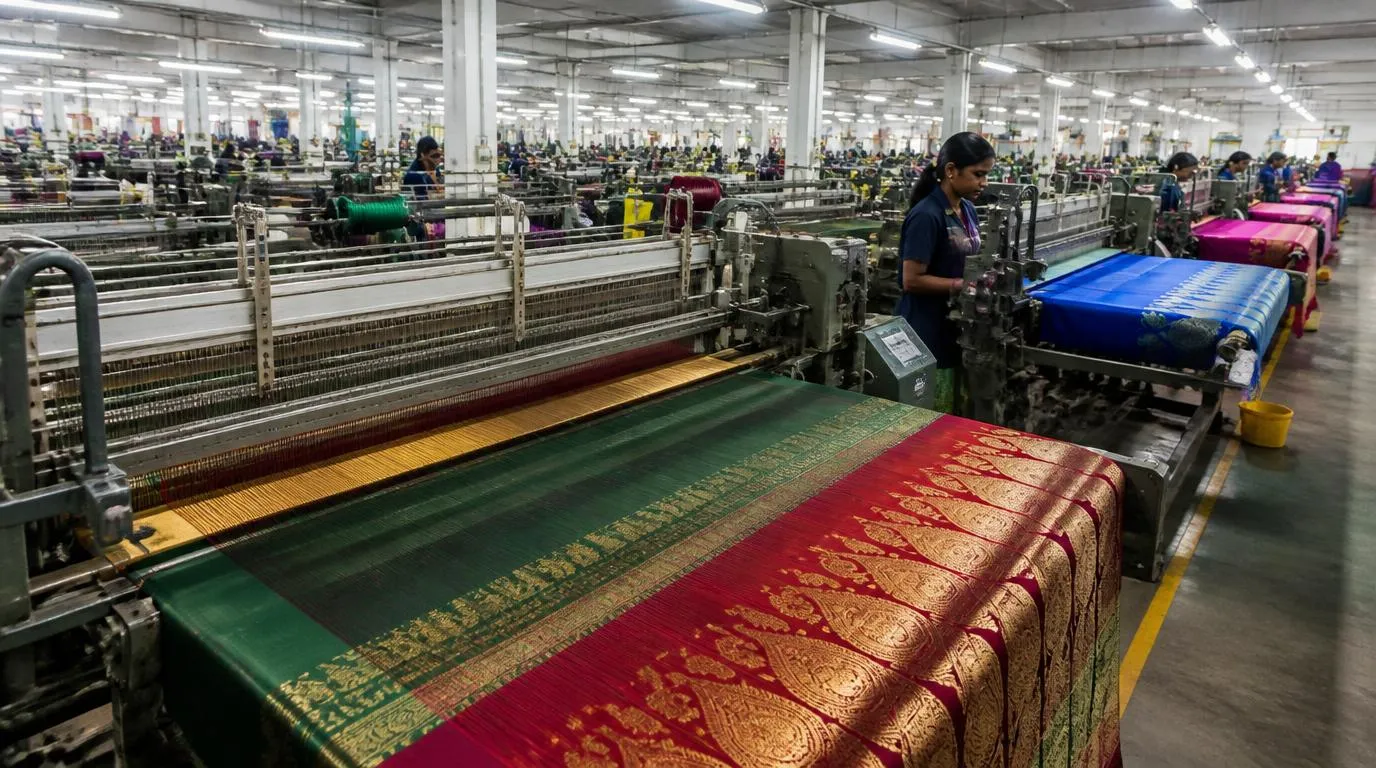
machine made (also called powerloom) sarees are woven on mechanical looms powered by electricity. These machines can produce hundreds of sarees in a single day with minimal human intervention. The designs are programmed, and the process is highly automated.
Powerloom sarees are what you'll find in most budget-friendly stores and online marketplaces. They are affordable, consistent, and widely available in countless colors and patterns. Many powerlooms now produce sarees that mimic handloom designs – including fake Jamdani, Tangail, and even Benarasi patterns.
Characteristics of machine made sarees: Perfectly uniform weave, consistent thickness, glossy finish (often from synthetic yarns or finishes), and identical repeats of patterns. They lack the natural irregularities that make handloom special, but they are accessible to a much wider audience.
Key Differences at a Glance
| Aspect | Handloom | machine made (Powerloom) |
|---|---|---|
| Weaving | Manual, human-operated loom. Slow process (days to months). | Electric, automated loom. Fast (hundreds per day). |
| Fabric Quality | Soft, breathable, natural sheen. Irregularities are normal. | Uniform, often glossy, can feel stiff or synthetic. |
| Durability | Highly durable – can last decades with proper care. | Less durable – fibers weaken from high-tension weaving. |
| Price | Higher – reflects labor, skill, and time. | Lower – mass production reduces cost. |
| Designs | Unique, intricate, handcrafted. No two are identical. | Uniform, repeatable, often imitates handloom designs. |
| Cultural Value | High – preserves heritage and supports artisans. | Low – commercial, mass-produced. |
How to Identify Handloom vs Machine Made
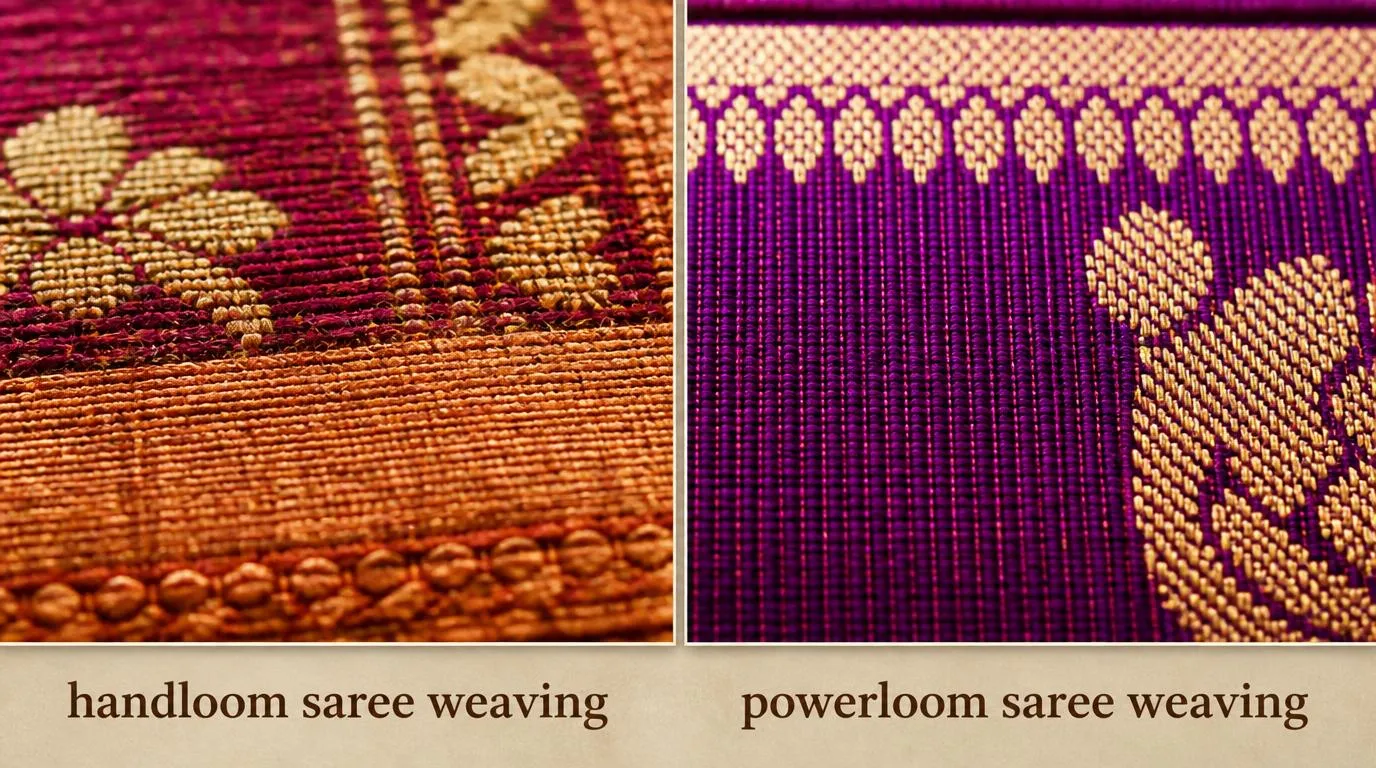
Knowing how to spot the difference can save you from paying a handloom price for a powerloom saree. Here are my tried-and-tested tips:
- Check the selvedge (edges): Handloom sarees have neat, compact selvedges that are woven together with the fabric. Powerloom selvedges are often loose, frayed, or have a separate edge stitched on.
- Look for irregularities: Hold the saree against light. A handloom saree will have subtle variations in the weave – slightly different thicknesses, minor slubs (tiny bumps), and uneven borders. machine made is perfectly uniform.
- Feel the fabric: Handloom cotton or silk feels softer and more breathable. Powerloom fabric often has a synthetic gloss or feels stiff from chemical finishes.
- Check the design repeat: In handloom, the motif repeat is rarely exact – you'll see small variations. In machine made, every repeat is identical.
- Look at the pallu border junction: In handloom, the border and pallu are integrated seamlessly. In powerloom, they are often stitched or glued.
Pros and Cons of Each
Handloom Sarees
Pros:
- Superior fabric quality and breathability
- Long-lasting – can be passed down as heirlooms
- Unique, one-of-a-kind designs
- Supports traditional artisans and preserves cultural heritage
- Environmentally friendly (no electricity used in weaving)
Cons:
- Higher price point
- Requires more care in washing and storing
- Limited availability – not all designs are widely produced
- Risk of counterfeits (machine made sold as handloom)
machine made (Powerloom) Sarees
Pros:
- Affordable – fits almost every budget
- Widely available in countless colors and patterns
- Consistent quality – no surprises
- Low maintenance – can withstand frequent washing
- Good for everyday wear and casual use
Cons:
- Less breathable – often uses synthetic or blended yarns
- Less durable – may lose shape or fade quickly
- No cultural or artisanal value
- Environmental impact from electricity use and chemical finishing
- Often imitates handloom designs without the soul
Which One Should You Choose?
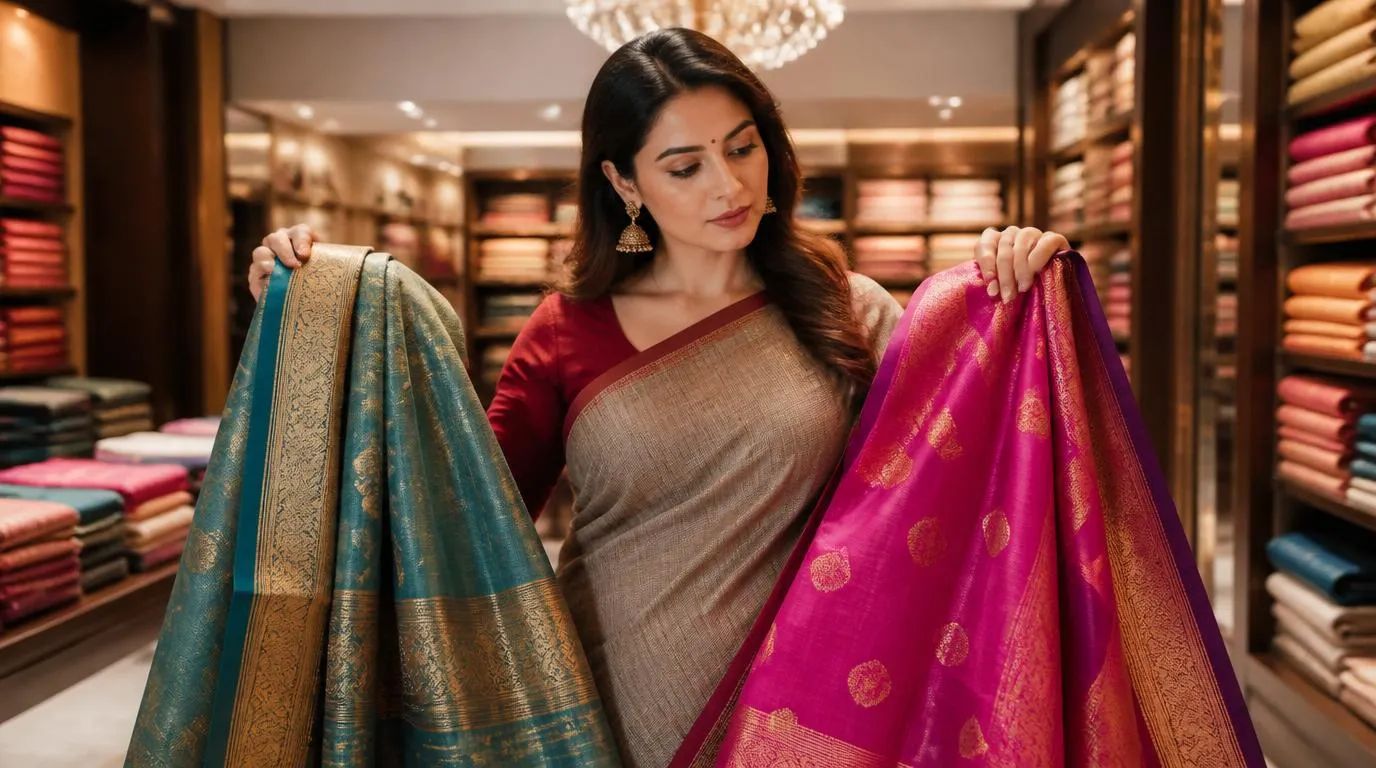
There's no universal right answer – it depends on your needs, budget, and values. Here's a simple guide:
- Choose handloom if: You want a saree that will last for decades, you value craftsmanship and cultural heritage, you have the budget for a quality piece, and you're buying for a special occasion like a wedding or a milestone event.
- Choose machine made if: You need an affordable saree for everyday wear, you're on a tight budget, you prefer consistent designs, or you want a wide variety of colors and patterns to match different outfits.
- Consider a hybrid: Some weavers now create "semi-handloom" sarees where the base is machine-woven but the border and pallu are hand-finished. These can be a good middle-ground.
My personal approach: I invest in a few high-quality handloom sarees for special occasions (weddings, Eid, family gatherings) and keep a collection of affordable powerloom sarees for daily wear, work, and casual outings. This way, I get the best of both worlds.
Environmental & Social Impact
Beyond the fabric itself, your choice has a wider impact:
- Handloom: Uses no electricity, has a low carbon footprint, and supports thousands of rural artisans in Bangladesh. The handloom sector is the second largest source of rural employment after agriculture. By buying handloom, you're directly supporting families and preserving a 500-year-old tradition.
- Powerloom: Consumes significant electricity and often uses chemical finishes to mimic the handloom look. The working conditions in powerloom factories can also be a concern. However, they provide affordable clothing to millions of people and contribute to the economy.